
Ever run out of ways to say “that’s amazing” and just settle for a boring thumbs-up emoji? You’re not alone. Standard vocabulary like “great” or “nice” can feel flat, especially in texts, captions, or everyday conversation.
That’s where slang comes in. Words like fire, bussin, and GOATED let you express real excitement instead of a generic compliment. They carry tone, energy, and a bit of personality that plain English just can’t match.
This guide breaks down 22+ slang words for awesome, where they come from, how different generations use them, and how to use them naturally without sounding like you’re trying too hard. By the end, you’ll have a full toolkit of cool ways to say something is amazing in 2026.
Quick Reference Table
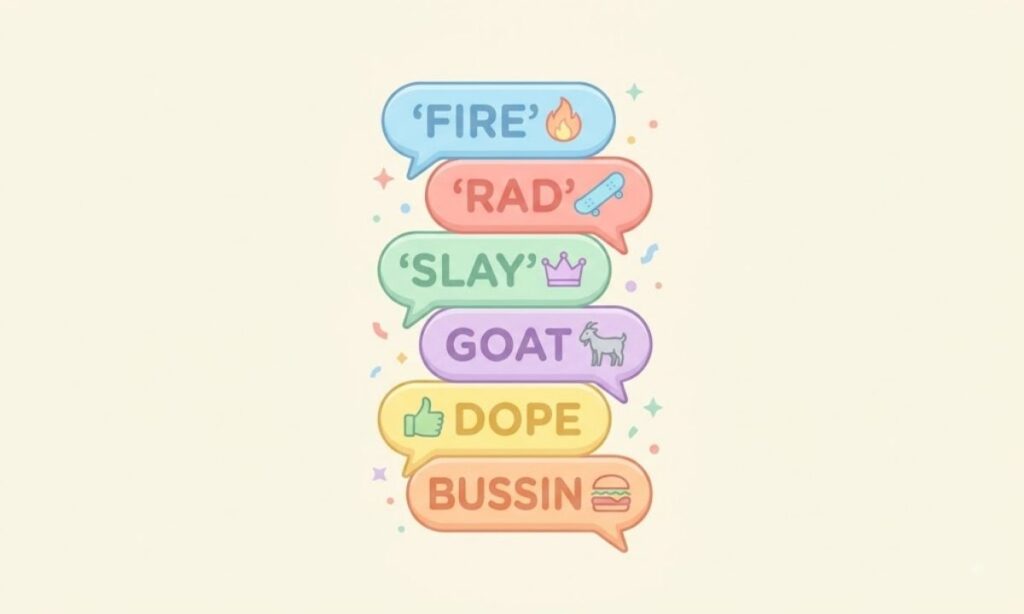
Here’s a fast snapshot of the most popular slang for awesome, along with meaning, origin, and where you’re most likely to hear it.
| Slang Term | Meaning | Popular With | Best Used In |
|---|---|---|---|
| Fire | Excellent, impressive | Gen Z, Millennials | Music, food, fashion |
| Rad | Cool, awesome | Gen X, Millennials | Casual conversation |
| Fire AF | Extremely excellent | Gen Z | Social media captions |
| Banger | An outstanding song or moment | Gen Z, Millennials | Music, events |
| Slay | Doing something exceptionally well | Gen Z | Compliments, style |
| GOATED | The best of all time | Gen Z | Sports, skills, talent |
| Wavy | Stylish, on-trend | Gen Z | Fashion, aesthetics |
| Phenomenal | Extraordinary, remarkable | All generations | Formal-casual mix |
| Lit | Exciting, fun | Gen Z, Millennials | Parties, events |
| Dope | Cool, impressive | Millennials, Gen Z | Music, general praise |
| Sick | Amazing, impressive | Gen Z, Millennials | Sports, stunts, skills |
| Epic | Grand, extraordinary | All generations | Achievements, gaming |
| GOAT | Greatest of all time | Gen Z, Millennials | Sports, pop culture |
| Slaps | Sounds really good | Gen Z | Music |
| Bussin | Really delicious | Gen Z | Food |
| Solid | Reliable, good | All generations | General approval |
| Clutch | Perfectly timed, crucial win | Gen Z, Millennials | Sports, last-minute wins |
| Killer | Impressively good | Gen X, Millennials | General praise |
| Legit | Genuinely good, real | All generations | Everyday validation |
| Bomb | Excellent | Millennials, Gen Z | Food, experiences |
| Peak | The best version | Gen Z | Comparisons |
| Unreal | Hard to believe, amazing | All generations | Performances, results |
| Smooth | Effortlessly well done | All generations | Skills, delivery |
| Next-Level | Beyond expectations | Millennials, Gen Z | Achievements, quality |
17 Slang Terms That Mean “Awesome”
Below is a closer look at some of the most widely used slang words for awesome, with real examples of how people actually use them.
Fire
“Fire” describes something so good it feels intense or standout, whether it’s a song, an outfit, or a meal.
- Example: “That new track is fire.”
- Common in: music, fashion, food reviews
Rad
Short for “radical,” rad has been around since the 1980s skate and surf scene and still holds up as a casual way to call something cool.
- Example: “That was a rad idea.”
- Common in: casual, nostalgic conversation
Fire AF
Adding “AF” (as f***, used mildly) intensifies the compliment, turning “fire” into an even stronger reaction.
- Example: “This playlist is fire AF.”
- Common in: texting, social captions
Banger
A “banger” is something that hits hard in the best way, usually a song, but also used for standout moments or plays.
- Example: “That last song was a total banger.”
- Common in: music, sports highlights
Slay
“Slay” praises someone for doing something exceptionally well, often tied to confidence, style, or performance.
- Example: “You slayed that presentation.”
- Common in: style, achievements, social media
GOATED
An adjective form of GOAT, “goated” means someone or something is considered the best in its category.
- Example: “This app is goated for productivity.”
- Common in: gaming, sports, product reviews
Wavy
“Wavy” describes something stylish, smooth, and on-trend, often tied to fashion or an overall aesthetic.
- Example: “Your fit is wavy today.”
- Common in: fashion, style commentary
Phenomenal
A more formal-sounding slang choice, “phenomenal” works well when you want to sound impressed without being overly casual.
- Example: “Her performance was phenomenal.”
- Common in: reviews, semi-formal praise
Lit
“Lit” describes something exciting, fun, or high-energy, often used for parties, events, or good news.
- Example: “The concert last night was lit.”
- Common in: events, celebrations
Dope
“Dope” is a long-standing way to call something cool or impressive, especially in music and pop culture.
- Example: “That mural is really dope.”
- Common in: art, music, general praise
Sick
Despite its literal meaning, “sick” is a compliment meaning something is amazing or impressive, often tied to skill or stunts.
- Example: “That skateboarding trick was sick.”
- Common in: sports, gaming, action
Epic
“Epic” is used for anything grand, extraordinary, or larger than life, from gaming moments to real-life achievements.
- Example: “That road trip was epic.”
- Common in: gaming, adventures, achievements
GOAT
Standing for “Greatest Of All Time,” GOAT is used to crown someone or something as the best in its field.
- Example: “She’s the GOAT of women’s tennis.”
- Common in: sports, pop culture debates
Slaps
“Slaps” is specifically used for music that sounds really good, especially with a strong beat.
- Example: “This beat slaps.”
- Common in: music commentary
Bussin
“Bussin” describes food that tastes really, really good, a term that gained massive popularity through TikTok.
- Example: “This burger is bussin.”
- Common in: food reviews, social media
Solid
“Solid” is a dependable, low-key way to say something is genuinely good without over-hyping it.
- Example: “That was a solid effort.”
- Common in: everyday conversation, feedback
Clutch
“Clutch” describes something that comes through at exactly the right moment, often under pressure.
- Example: “That last-minute save was so clutch.”
- Common in: sports, gaming, teamwork
Killer
“Killer” is an older but still relevant way to say something is impressively good.
- Example: “You did a killer job on this project.”
- Common in: work praise, general compliments
Legit
“Legit” means genuinely good or real, often used to confirm that something lives up to the hype.
- Example: “This restaurant is legit.”
- Common in: everyday validation
Bomb
“Bomb” is a casual way to say something is excellent, especially popular for food and experiences.
- Example: “That taco truck is the bomb.”
- Common in: food, casual praise
Peak
“Peak” describes the best possible version of something, often used to say a moment or era was as good as it gets.
- Example: “That was peak vacation energy.”
- Common in: comparisons, nostalgia
Unreal
“Unreal” expresses disbelief at how good something is, almost too impressive to be true.
- Example: “The view from up there was unreal.”
- Common in: performances, results, scenery
Smooth
“Smooth” praises something done with ease, style, or skill, without any visible effort.
- Example: “That was a smooth presentation.”
- Common in: delivery, skills, style
Next-Level
“Next-level” means something goes beyond normal expectations, often used for quality or creativity.
- Example: “Her cooking is next-level.”
- Common in: achievements, product quality
How Different Generations Use Slang
Slang for awesome doesn’t stay the same across age groups. Each generation brings its own favorites, shaped by the culture and media it grew up with.
- Baby Boomers: Groovy, far out, and neat were once the go-to words for expressing approval.
- Gen X: Rad, killer, and awesome itself became everyday staples in the 1980s and 90s.
- Millennials: Dope, sick, and epic took over, often shaped by early internet culture and gaming.
- Gen Z: Bussin, slay, GOATED, and fire AF dominate, largely driven by TikTok and other social platforms.
- Gen Alpha: Already blending Gen Z slang with new, fast-evolving terms shaped by short-form video trends.
Understanding this generational shift is useful because using outdated slang around younger audiences (or vice versa) can feel out of place. Context and audience matter just as much as the word itself.
How to Use Slang Naturally Without Sounding Awkward
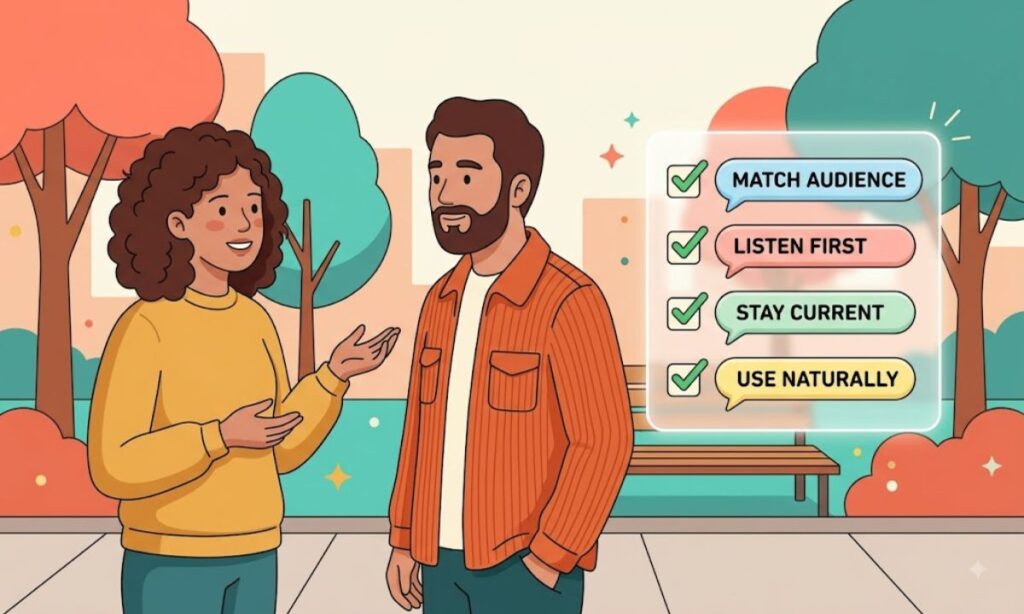
Slang only works when it feels natural. Forced or overused slang can come across as try-hard rather than genuine. Here’s how to keep it authentic:
- Match your audience. Use terms your friends, followers, or community already recognize.
- Don’t overload a sentence. One slang word per sentence usually lands better than stacking three.
- Watch your tone. Slang should match genuine excitement, not sound sarcastic unless that’s the intent.
- Stay current, but don’t force it. If a word feels outdated to your audience, skip it, even if it’s technically still “slang.”
- Listen before you use it. Pay attention to how native speakers of that slang actually use the term in real conversations or posts.
When to Use Slang for Awesome
Slang isn’t right for every situation. Knowing where it fits helps you avoid sounding unprofessional or out of place.
- Good for: texting friends, social media captions, casual conversations, product reviews aimed at younger audiences, gaming chats
- Avoid in: formal emails, academic writing, job applications, professional reports, first impressions with new business contacts
A simple rule of thumb: if you wouldn’t say it out loud in a work meeting, save it for casual settings instead.
Slang for Awesome in Texting and Social Media
Texting and social platforms are where most slang for awesome actually lives and spreads. A few patterns show up again and again:
- Short captions: “This fit is fire 🔥” or “ngl this is bussin.”
- Hashtags and comments: Words like slay, goated, and lit frequently appear in comment sections to react to posts.
- Abbreviated intensifiers: Adding “af,” “fr,” or “no cap” boosts the strength of the compliment.
- Emoji pairing: Fire, lit, and dope are often paired with matching emojis (🔥, 💯, 😮) to reinforce the tone.
Because platforms like TikTok and Instagram move fast, slang trends can shift within months. What feels fresh today may sound dated within a year or two, so keep an eye on how current terms are actually being used.
Common Slang Mistakes
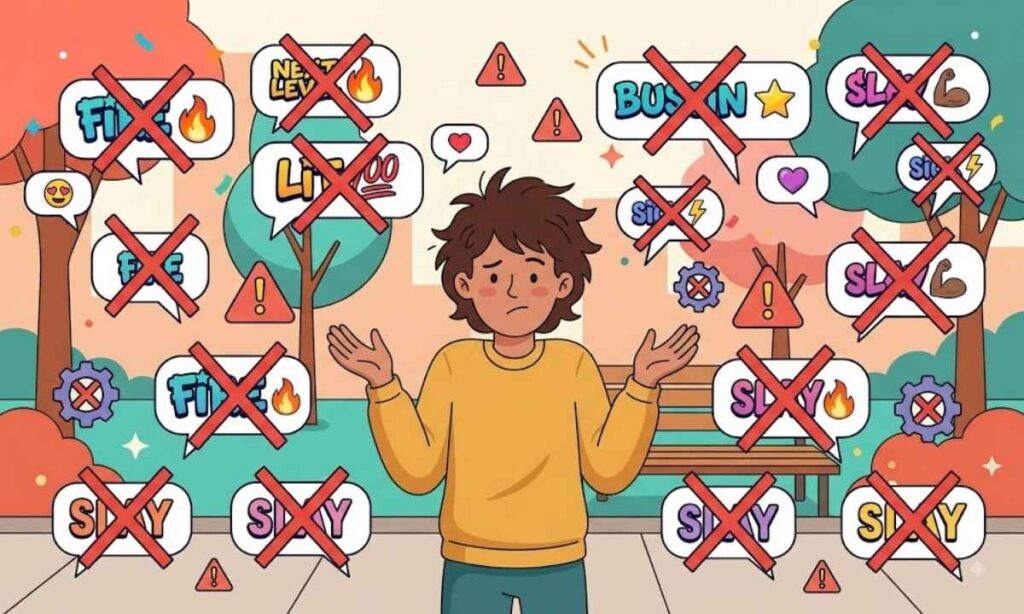
Even simple slang can go wrong if it’s misused. Watch out for these common mistakes:
- Using outdated slang with the wrong crowd: Saying “that’s rad” to a Gen Z audience might land differently than intended.
- Overusing intensifiers: Stacking “fire AF, literally so bussin, no cap” in one sentence feels forced.
- Ignoring context: Slang that works for food (“bussin”) doesn’t always transfer well to other situations, like praising someone’s job performance.
- Using slang in formal writing: Resumes, cover letters, and business emails should stick to standard vocabulary.
- Mispronouncing or misspelling terms: Getting the spelling wrong (like “bussing” instead of “bussin”) can make the usage feel off.
Practice Section
Test what you’ve learned with these quick exercises.
Fill in the Blanks
- “That new song is absolutely _______.” (starts with F)
- “Her outfit today is so _______, everyone noticed.” (starts with W)
- “This pizza is _______, you have to try it.” (starts with B)
- “He’s the _______ of basketball right now.” (G.O.A.T.)
- “That was a _______ save in the last five seconds.” (starts with C)
Choose the Correct Slang
1. Which word best describes a really good song with a strong beat? A) Legit B) Slaps C) Solid D) Smooth
2. Which term is most appropriate for describing delicious food? A) Epic B) Killer C) Bussin D) Peak
3. Which slang word means “the greatest of all time”? A) Dope B) GOAT C) Rad D) Fire
Rewrite Into Slang
Rewrite these plain sentences using at least one slang word from this article.
- “The movie was really impressive.”
- “That was a very good comeback in the game.”
- “Her singing was extremely good.”
- “This restaurant serves excellent food.”
- “He gave a really confident performance.”
Conclusion
Slang for awesome gives everyday language a boost of personality that plain words like “good” or “nice” simply can’t match. From timeless classics like rad and dope to fresh Gen Z favorites like bussin and GOATED, each term carries its own flavor, history, and best-use context.
The key to sounding natural is picking the right word for the right moment, matching your audience, and not overloading a single sentence with too many slang terms at once. With the 22+ options covered here, you now have a solid toolkit to describe anything amazing without repeating the same word twice.
FAQs
What is the most popular slang word for awesome in 2026?
Fire and bussin remain two of the most widely used terms, especially across social media and Gen Z conversations.
Is “lit” still used in 2026?
Yes, “lit” is still commonly used to describe exciting events, parties, or fun moments.
What’s the difference between “fire” and “fire AF”?
“Fire AF” is simply a stronger, more intense version of “fire,” used when something is especially impressive.
Can I use slang for awesome in professional writing?
It’s best to avoid slang in formal or professional writing and save it for casual conversations, texting, or social media.
Why does slang change so quickly?
Slang evolves fast because it’s driven by social media trends, pop culture, and shifting generational preferences.
Is “GOAT” only used for sports?
No, GOAT is also used for music, movies, food, and everyday achievements, not just sports.

I am Olivia, the passionate writer and creator behind MeaningZime, where I share meaningful insights, inspiring ideas, and engaging content about names, quotes, emotions, and life-related topics. I love exploring the deeper meanings hidden in words and turning them into easy-to-understand articles that inform and inspire readers around the world. Through MeaningZime.com, my goal is to create a place where curiosity meets knowledge and every visitor finds something valuable, relatable, and uplifting.
