
Slang moves fast. One year a word is confined to a single neighborhood, and the next it’s showing up in song lyrics, TikTok captions, and group chats around the world. A lot of the expressions people search for under the label “ghetto slang” actually come from urban communities and African American Vernacular English (AAVE), then spread through hip-hop, social media, and pop culture until they become part of everyday conversation for people who have no idea where the words originated.
This guide breaks down 35 of the most popular terms you’ll actually hear in 2026 — what they mean, where they came from, and how to use them naturally without sounding forced. Whether you’re trying to keep up with your group chat, understand a song lyric, or just stay current, this list has you covered.
Quick Reference Table
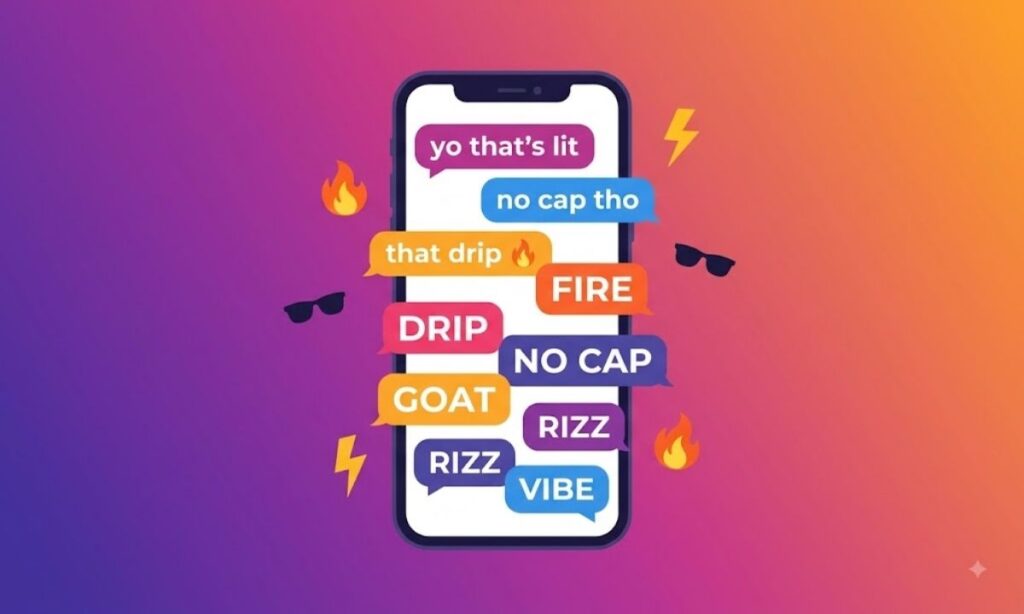
| Term | Meaning | Example Use |
| Lit | Exciting or amazing | “That concert was lit.” |
| Drip | Stylish outfit or accessories | “His drip is unmatched today.” |
| Flex | To show off | “Stop flexing your new car.” |
| Cap | A lie | “That story is cap.” |
| No Cap | No lie, seriously | “No cap, this is the best pizza ever.” |
| OG | Original, respected veteran | “He’s an OG in this game.” |
| Bussin | Extremely good, usually food | “This burger is bussin.” |
| Slaps | Sounds really good (music) | “This song slaps.” |
| Glow Up | A major positive transformation | “She had a huge glow up this year.” |
| Bet | Agreement, “okay” | “Bet, I’ll see you at seven.” |
| Lowkey | Somewhat, secretly | “I’m lowkey nervous.” |
| Highkey | Openly, very much | “I’m highkey excited for this.” |
| Woke | Socially aware | “He’s woke about political issues.” |
| Throwing Shade | Subtle insult | “She was throwing shade at the meeting.” |
| Squad | Close group of friends | “My squad is coming over tonight.” |
| Hype | Excitement or buzz | “There’s so much hype for the new movie.” |
| Dead | Extremely funny | “I’m dead, that meme is hilarious.” |
| Brutal | Harsh or unpleasant | “That loss was brutal.” |
| Snatched | Looking sharp or perfect | “Her makeup is snatched.” |
| Fire | Excellent, impressive | “These sneakers are fire.” |
| Savage | Bold, fierce, or blunt | “That comeback was savage.” |
| Yeet | Expression of excitement or force | “He yeeted the ball across the field.” |
| Fam | Close friend or family | “What’s up, fam?” |
| Rizz | Charisma, flirting skill | “He’s got serious rizz.” |
| Stan | An obsessive fan | “I stan that artist so hard.” |
| Clout | Social influence or fame | “She’s chasing clout online.” |
| Mood | Relatable feeling | “That’s such a mood.” |
| Big Mad | Extremely angry | “He’s big mad about the ruling.” |
| Goated | The greatest of all time | “That player is goated.” |
| Chill | Relaxed or calm | “Let’s just chill tonight.” |
| Vibe | An atmosphere or feeling | “This place has a great vibe.” |
| Salty | Bitter or annoyed | “Why are you so salty about this?” |
| Ghost | To suddenly stop responding | “He ghosted me after one date.” |
| Extra | Overly dramatic | “She’s being so extra right now.” |
| Dope | Cool or impressive | “That’s a dope idea.” |
35 Popular Ghetto Slang Terms
Below is a closer look at each term, along with how and when people actually use it.
Lit
“Lit” describes anything exciting, fun, or high-energy. It’s most commonly used to describe parties, events, or performances.
- Meaning: Exciting, amazing, full of energy
- Example: “The block party got lit once the DJ showed up.”
- When to use it: Casual conversations about events or hangouts
- When not to use it: Formal writing or professional settings
Drip
“Drip” refers to someone’s style, outfit, or overall fashion presence. If someone has “drip,” their look is on point.
- Meaning: Stylish clothing, shoes, or accessories
- Example: “New drip for the weekend, I see you.”
- When to use it: Complimenting fashion choices
- When not to use it: Serious professional feedback
Flex
“Flex” means showing off something you’re proud of, whether it’s money, achievements, or possessions.
- Meaning: To show off
- Example: “He’s always flexing his new gadgets.”
- When to use it: Playful teasing among friends
- When not to use it: Situations where bragging could offend
Cap
“Cap” is slang for a lie or exaggeration. It’s one of the most widely used terms across social media comment sections.
- Meaning: A lie
- Example: “You said you ran a marathon? That’s cap.”
- When to use it: Calling out an exaggeration playfully
- When not to use it: Serious accusations of dishonesty
No Cap
The opposite of “cap,” this phrase emphasizes that someone is telling the truth.
- Meaning: No lie, seriously, for real
- Example: “No cap, that was the best meal I’ve had all year.”
- When to use it: Emphasizing sincerity
- When not to use it: Formal or written communication
OG
Short for “original gangster,” this term now broadly refers to someone respected for being first, experienced, or authentic in a particular space.
- Meaning: An original, a respected veteran
- Example: “She’s an OG in the fashion industry.”
- When to use it: Showing respect for experience
- When not to use it: Contexts where the historical meaning could be misread
Bussin
“Bussin” describes something — usually food — that tastes amazing.
- Meaning: Extremely good, delicious
- Example: “These tacos are bussin.”
- When to use it: Talking about food or standout experiences
- When not to use it: Professional reviews or formal writing
Slaps
When a song “slaps,” it means it sounds especially good.
- Meaning: Sounds excellent, usually about music
- Example: “This new album slaps from start to finish.”
- When to use it: Music conversations
- When not to use it: Non-music contexts, where it can be confusing
Glow Up
A “glow up” refers to a noticeable, often dramatic improvement in appearance, confidence, or lifestyle.
- Meaning: A major positive transformation
- Example: “Her glow up between high school and college was incredible.”
- When to use it: Complimenting personal growth
- When not to use it: Sensitive conversations about body image
Bet
“Bet” is used to confirm agreement, similar to saying “okay” or “for sure.”
- Meaning: Agreement, confirmation
- Example: “Meet me at six? Bet.”
- When to use it: Quick, casual confirmations
- When not to use it: Formal scheduling or written agreements
Lowkey
“Lowkey” softens a statement, suggesting something is true but not to an extreme degree.
- Meaning: Somewhat, secretly, mildly
- Example: “I’m lowkey obsessed with this show.”
- When to use it: Understated admissions
- When not to use it: Precise or formal communication
Highkey
The opposite of “lowkey,” this term emphasizes that something is very much true or obvious.
- Meaning: Openly, very much, obviously
- Example: “I’m highkey stressed about this exam.”
- When to use it: Emphasizing strong feelings
- When not to use it: Professional emails or reports
Woke
“Woke” originally described awareness of social and racial injustice. It has since expanded, and its usage online is often debated.
- Meaning: Socially or politically aware
- Example: “He’s very woke when it comes to current events.”
- When to use it: Discussions about social awareness
- When not to use it: Contexts where the term’s political connotations could derail the conversation
Throwing Shade
This phrase describes a subtle, often sarcastic insult or criticism.
- Meaning: Indirectly insulting someone
- Example: “She kept throwing shade at his presentation.”
- When to use it: Describing passive-aggressive behavior
- When not to use it: Direct confrontations, where it can sound dismissive
Squad
“Squad” refers to a close-knit group of friends.
- Meaning: A tight friend group
- Example: “The whole squad is meeting up this weekend.”
- When to use it: Casual social plans
- When not to use it: Formal team or workplace references
Hype
“Hype” describes excitement or anticipation building around something.
- Meaning: Excitement, buzz
- Example: “There’s so much hype around the new phone release.”
- When to use it: Talking about upcoming events or releases
- When not to use it: Neutral, factual reporting
Dead
“Dead” is used to express that something is extremely funny.
- Meaning: Hilarious, can’t stop laughing
- Example: “I’m dead, that video is too funny.”
- When to use it: Reacting to humor online
- When not to use it: Serious or sensitive discussions, where it can sound insensitive
Brutal
While not exclusive to slang, “brutal” is often used casually to describe something harsh, disappointing, or intense.
- Meaning: Harsh, difficult, unpleasant
- Example: “That exam was brutal.”
- When to use it: Describing tough situations
- When not to use it: Formal reviews of actual violence or harm
Snatched
“Snatched” describes someone or something that looks sharp, flawless, or perfectly put together.
- Meaning: Looking great, flawless
- Example: “Her outfit is snatched today.”
- When to use it: Compliments on appearance
- When not to use it: Formal or professional feedback
Fire
“Fire” is a classic slang term meaning something is excellent or impressive.
- Meaning: Excellent, impressive
- Example: “These new sneakers are fire.”
- When to use it: General compliments
- When not to use it: Discussions involving actual fire or danger, where confusion could occur
Savage
“Savage” describes something bold, blunt, or fierce, often used admiringly.
- Meaning: Bold, unapologetic, fierce
- Example: “That reply was savage.”
- When to use it: Praising confidence or wit
- When not to use it: Situations involving real cruelty
Yeet
“Yeet” is an exclamation used when throwing something with force, or simply as an expression of excitement.
- Meaning: An expression of excitement or forceful action
- Example: “He yeeted his backpack across the room.”
- When to use it: Playful, high-energy moments
- When not to use it: Formal writing
Fam
“Fam” is short for family, used to refer to close friends who feel like family.
- Meaning: A close friend or friend group
- Example: “Thanks for the help, fam.”
- When to use it: Casual, friendly conversations
- When not to use it: Professional communication
Rizz
“Rizz” refers to someone’s charm or ability to attract romantic interest.
- Meaning: Charisma, flirting skill
- Example: “He’s got so much rizz, everyone loves him.”
- When to use it: Talking about charm or dating
- When not to use it: Formal settings
Stan
To “stan” someone means to be an extremely devoted fan.
- Meaning: An obsessive or devoted fan
- Example: “I stan that singer so much.”
- When to use it: Fandom or pop culture conversations
- When not to use it: Professional discussions of admiration
Clout
“Clout” refers to influence, popularity, or social status, especially online.
- Meaning: Social influence or fame
- Example: “He’s only doing it for the clout.”
- When to use it: Discussing social media behavior
- When not to use it: Formal business contexts
Mood
“Mood” is used to express strong relatability to a situation, image, or statement.
- Meaning: Something highly relatable
- Example: “Staying in bed all day? Mood.”
- When to use it: Reacting to relatable content
- When not to use it: Formal writing
Big Mad
This phrase emphasizes extreme anger or frustration.
- Meaning: Extremely angry
- Example: “Fans are big mad about the season finale.”
- When to use it: Describing strong reactions online
- When not to use it: Professional complaints
Goated
“Goated” comes from the acronym G.O.A.T. (Greatest Of All Time) and describes someone or something considered the best.
- Meaning: The greatest of all time
- Example: “That’s the goated version of this game.”
- When to use it: Praising exceptional skill or quality
- When not to use it: Formal evaluations
Chill
“Chill” describes a relaxed mood, person, or activity.
- Meaning: Relaxed, calm, easygoing
- Example: “Let’s keep tonight chill.”
- When to use it: Describing low-key plans
- When not to use it: Situations requiring urgency
Vibe
“Vibe” refers to the overall feeling or energy of a person, place, or moment.
- Meaning: An atmosphere or feeling
- Example: “This coffee shop has such a good vibe.”
- When to use it: Describing mood or atmosphere
- When not to use it: Precise, factual descriptions
Salty
“Salty” describes someone who is bitter, annoyed, or upset, often over something minor.
- Meaning: Bitter, annoyed
- Example: “Don’t be salty just because you lost.”
- When to use it: Light teasing among friends
- When not to use it: Serious emotional conversations
Ghost
To “ghost” someone means to suddenly cut off all communication without explanation.
- Meaning: To disappear or stop responding
- Example: “He ghosted me after the second date.”
- When to use it: Talking about dating or friendships
- When not to use it: Formal or professional relationships
Extra
“Extra” describes someone or something that is overly dramatic or over the top.
- Meaning: Excessive, overly dramatic
- Example: “She’s being so extra about this small mistake.”
- When to use it: Playful commentary on behavior
- When not to use it: Serious critiques
Dope
“Dope” is a classic slang term meaning cool, impressive, or excellent.
- Meaning: Cool, impressive
- Example: “That’s a dope mural on the wall.”
- When to use it: General compliments
- When not to use it: Discussions involving actual drugs, where confusion could arise
Generational Slang Comparison
Slang doesn’t stay the same across generations. Each generation reshapes language to fit its own culture and communication style.
| Generation | Popular Slang Style | Example Terms |
| Baby Boomers | Simple, direct expressions | “Groovy,” “Far out” |
| Gen X | Casual, sarcasm-driven | “Chill,” “Rad” |
| Millennials | Internet and text-based | “Lit,” “On fleek,” “Salty” |
| Gen Z | Fast-evolving, meme-driven | “Rizz,” “No cap,” “Goated” |
| Gen Alpha | Emerging, gaming and app-influenced | “Yeet,” “Sus,” “Bussin” |
Each generation tends to borrow, remix, and reinvent slang from the one before it, which is why some words — like “fire” or “dope” — have stuck around for decades while others fade quickly.
Slang in Social Media and Online Conversations
Social media platforms are the biggest driver of slang today. A single video or comment can push a word from a local community into global usage within days.
- TikTok and Instagram Reels popularize terms through captions, sounds, and trends.
- Twitter/X spreads slang quickly through short, reactive posts.
- YouTube comments and streaming chats normalize slang in real-time conversation.
- Music and hip-hop culture continue to be a major source of new expressions.
Because of this constant exposure, many people pick up slang without even realizing where it originated, which is part of why understanding the roots of these terms matters.
Slang vs. Formal Language: When to Use Each
Knowing when to use slang — and when to avoid it — is just as important as knowing what the words mean.
Use slang when:
- Texting friends or family
- Posting casual content on social media
- Having relaxed, informal conversations
Use formal language when:
- Writing emails, resumes, or reports
- Speaking in interviews or professional meetings
- Communicating with people you don’t know well
Mixing the two inappropriately — like using heavy slang in a job application — can come across as unprofessional, so context always matters more than the words themselves.
How to Use Slang Naturally Without Sounding Awkward
- Listen before you use it. Pay attention to how native speakers actually use a term in context.
- Match the tone of the conversation. Slang works best when the overall conversation is already casual.
- Don’t overuse it. Stacking too many slang words in one sentence can sound forced.
- Understand the meaning fully. Using a term incorrectly is more noticeable than not using it at all.
- Be mindful of origin and context. Many of these terms come from specific cultural communities, so use them respectfully.
Common Slang Mistakes
- Using outdated slang: Words fade fast, and using last year’s trending term can feel out of touch.
- Misusing meaning: Confusing “cap” and “no cap” is one of the most common errors.
- Overusing terms in formal settings: Slang in a cover letter or business email rarely lands well.
- Copying slang without understanding tone: Some words carry sarcasm or humor that gets lost if used too literally.
- Ignoring regional differences: Not every term means the same thing in every city or online community.
Practice Section
Fill in the blanks
- That new song really _______ (slaps / brutal).
- I’m _______ excited about the trip, not going to lie. (highkey / salty)
- Stop being so _______, it was just a small mistake. (extra / chill)
- No _______, that was the best pizza I’ve ever had. (cap / ghost)
- He has serious _______ — everyone likes talking to him. (rizz / mood)
Choose the correct slang
- Which word means “a lie”? A) Bet B) Cap C) Dope D) Fam
- Which word describes an amazing transformation? A) Glow Up B) Ghost C) Salty D) Extra
- Which term means “the greatest of all time”? A) Lit B) Goated C) Vibe D) Squad
Rewrite in slang
Take each formal sentence and rewrite it using slang from this list.
- “I am not lying, this restaurant is excellent.”
- “She had an amazing personal transformation this year.”
- “He is showing off his new watch.”
FAQs
What is ghetto slang?
It refers to informal expressions that largely originated in urban communities, particularly through African American Vernacular English and hip-hop culture, before spreading into mainstream conversation.
Why does ghetto slang become mainstream?
Music, social media, and entertainment expose these terms to massive audiences, which helps them spread far beyond their original communities.
Is ghetto slang the same as internet slang?
Not exactly. Internet slang often forms directly from online culture, while much of this slang started in real-world communities and later moved online.
Can slang change meaning?
Yes. Meanings shift over time and can vary by region, platform, or generation, so a word’s definition today may not match how it was used a few years ago.
Is it okay to use slang everywhere?
No. Slang works well in casual settings, but formal situations like job interviews or professional writing call for standard language instead.
Conclusion
Slang is a living part of language, and the 35 terms covered here show just how creative, expressive, and fast-moving informal communication has become. Many of these words carry real cultural roots in urban communities and hip-hop, and understanding that context helps you use them respectfully rather than just repeating what’s trending. Whether you’re keeping up with your friends, decoding a caption, or just curious about how language evolves, this guide gives you a solid foundation for 2026 and beyond.

I am Olivia, the passionate writer and creator behind MeaningZime, where I share meaningful insights, inspiring ideas, and engaging content about names, quotes, emotions, and life-related topics. I love exploring the deeper meanings hidden in words and turning them into easy-to-understand articles that inform and inspire readers around the world. Through MeaningZime.com, my goal is to create a place where curiosity meets knowledge and every visitor finds something valuable, relatable, and uplifting.
