

Boxing Day meaning is simple: it is a public holiday on December 26, the day after Christmas Day. The name comes from the old custom of giving boxes filled with gifts, money, or food to servants, tradespeople, and people in need. The day has been a part of British Christmas since at least the 1700s. In 2026, Boxing Day falls on Saturday, December 26. In the United Kingdom, the bank holiday moves to Monday, December 28, because the date falls on a weekend.
If you have ever wondered why the day after Christmas is called Boxing Day, you are not alone. The name has nothing to do with the sport of boxing. It is not about returning unwanted gifts, even though many shops are busy with returns on the day. The real story is about giving, and it reaches back to church alms boxes, Christmas boxes for servants, and a feast day for Saint Stephen, the first Christian martyr. It comes right after Christmas Eve and Christmas Day. It leads into the run up to New Year’s Eve, so it sits at the heart of the Christmas week. This guide explains the meaning in plain words, the origin of the name, the 2026 date, and how people celebrate the day today.
Boxing Day Meaning in Simple Words
Boxing Day meaning is the day after Christmas Day, December 26, when gifts in boxes were once given to workers and to the poor. The word box is the key to the whole holiday. In old Britain, a Christmas box was a gift of money or goods, often kept in a box, and December 26 was the day those boxes were handed out.
The holiday began in the United Kingdom and spread to the countries of the Commonwealth, where it is still a public holiday in many places. In Ireland and much of Europe, the same date is known as Saint Stephen’s Day, and in South Africa it is called the Day of Goodwill.
The holiday is also known as Offering Day, a name that points to the same idea, a day for giving. In the church calendar, December 26 is the second day of Christmastide, the twelve days of Christmas, so the season does not end on Christmas Day. For many families, Boxing Day is a slower day, with leftovers on the table, a walk with family, and a football match or a cricket match on the television.
When Is Boxing Day in 2026?
Boxing Day 2026 is Saturday, December 26, 2026. The date never changes, because Boxing Day is always December 26, the day after Christmas Day, which falls on Friday, December 25, 2026. December is a month full of holidays, and Boxing Day closes the Christmas week.
In the United Kingdom, Boxing Day has been a bank holiday since 1871, but the bank holiday always falls on a weekday. When December 26 falls on a Saturday, as it does in 2026, the public holiday moves to the following Monday, December 28. The next year is different again. In 2027, Christmas Day falls on a Saturday and Boxing Day on a Sunday, so the two holidays move to Monday, December 27, and Tuesday, December 28.
Because the date is fixed, it is easy to plan around it. If you are in the United Kingdom, Canada, Australia, or New Zealand, expect shops, banks, and many offices to close or to keep short hours on December 26. The big sales start early in the morning.
Why Is It Called Boxing Day?
No one knows the exact origin of the name for certain, and historians offer more than one answer. The theories all point to boxes, though, and they probably all fed into the same custom over time. Here are the three main theories, and the honest truth is that the real story may be a mix of all three.
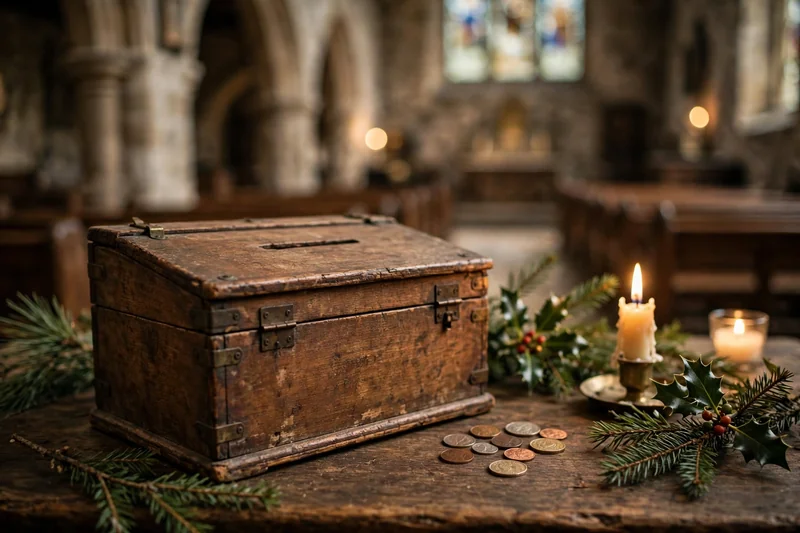
The first theory points to the church. During Advent, the four weeks before Christmas, churches placed alms boxes near the door, where people could leave money for the poor. On December 26, the boxes were opened and the money was shared out among people in need. The day fell on the feast of Saint Stephen, who was known for serving the poor. The link between the boxes and charity was strong, so the name may come from those alms boxes.
The second theory points to the Christmas box, a gift of money or goods given at Christmas. In the 1600s and 1700s, tradespeople expected a small box from the households they served all year. The postman, the baker, and the lamplighter all looked for one, as thanks for their work. The diarist Samuel Pepys wrote about giving money for a Christmas box. His diary entry for December 19, 1663, shows how common the custom already was in London. The Oxford English Dictionary gives its earliest written use of Boxing Day in 1743. Back then, it meant the day after Christmas Day, when tradespeople and servants received presents or tips from their customers and employers.
The third theory points to the servants of wealthy households. Servants had to work on Christmas Day, waiting on their employers at the Christmas meal, so they were given the next day off to visit their own families. Their employers sent them home with a box of leftover food, small gifts, and tips, and the day became their own Christmas. This custom was still strong in Victorian England, when the upper class boxed up leftovers, money, and goods for servants and tradesmen.
The carol Good King Wenceslas keeps the same story alive. John Mason Neale wrote it, and it was first published in 1853. It tells of a tenth century Duke of Bohemia, Saint Wenceslas. He walks through deep snow on the feast of Stephen, December 26, to carry food, wine, and firewood to a poor man. The song is a legend, not history, but it captures the spirit of the day: a person with more gives to a person with less.
So which theory is right? Historians say the exact origin is uncertain, and several of these customs probably fed into the name. The church alms boxes, the tradesmen’s Christmas boxes, and the servants’ boxes all shared the same idea. It was a box of thanks given on the day after Christmas, and that idea is what the name remembers.
Boxing Day and Saint Stephen’s Day: What Is the Connection?
Boxing Day and Saint Stephen’s Day fall on the same date, December 26, and the two names share one history. Saint Stephen was a deacon of the early church, and he is known as the first Christian martyr, because he was killed for his faith. He was also known for serving the poor, so his feast day became a natural day for giving, and the church tied the two ideas together long ago.
In Ireland, December 26 is still called Saint Stephen’s Day, and in much of Europe, including Germany, Austria, Poland, and Italy, the day is the second day of Christmas. In Northern Ireland and County Donegal, people use the name Boxing Day, while in the rest of Ireland, the name is Saint Stephen’s Day. In South Africa, the same date is a public holiday called the Day of Goodwill. It has carried that name since 1994, when the country chose a name that stressed the spirit of giving.
The two names describe the same day from two sides. Boxing Day is the British name, tied to gift boxes and to the custom of giving. Saint Stephen’s Day is the church name, tied to a saint who gave his life and who served the poor. When you hear either name, it means December 26, the day after Christmas.
What Is the Difference Between Boxing Day and Christmas Day?
Christmas Day, December 25, is the feast of the birth of Jesus, and it is the main day of the Christmas season. Families gather, exchange gifts, and eat a large meal together, and many people go to church in the morning. It is the day the season is built around, and it is a public holiday in most of the world.
Boxing Day, December 26, is the day after, and it is quieter. It is a day for rest, for visiting relatives who were not there on Christmas Day, and for eating leftovers. It is also a day for giving thanks to the people who served you during the year. There is no big feast and no new round of gifts. Instead, the day is a pause, a chance to enjoy the season without the rush of Christmas Day itself.
In short, Christmas Day is the feast, and Boxing Day is the day of thanks that follows it. The two days belong together, and in the church calendar, they are the first two days of Christmastide, the twelve days of Christmas. If Christmas Day is the high point, Boxing Day is the gentle slope down, and for many people, it is the more relaxed of the two.
Which Countries Celebrate Boxing Day?
Boxing Day is celebrated in the United Kingdom and in many countries that were once part of the British Empire, known as the Commonwealth. The main countries are the United Kingdom, Canada, Australia, and New Zealand, but the list also includes Nigeria, Trinidad and Tobago, Hong Kong, and Bermuda. In South Africa, December 26 is a public holiday called the Day of Goodwill. In Ireland, the day is Saint Stephen’s Day, though in Northern Ireland it is also called Boxing Day.
The holiday never took hold in the United States, which left British rule long before the custom spread, and most Americans do not mark the day at all. That is why many people in the United States first hear the name from British television or from friends abroad. Others hear it from shops that now use the name for their after Christmas sales.
The rules are not the same in every country. In the United Kingdom, Boxing Day has been a bank holiday since 1871, and when it falls on a weekend, the holiday moves to the next weekday. In Canada, it is a federal statutory holiday for workers in federally regulated jobs, and it is also a statutory holiday in Ontario, though not in every province. In Australia, it is a public holiday in all states except South Australia, where a different holiday, Proclamation Day, is kept instead. In New Zealand, it is a statutory holiday, and workers who must work on the day are paid extra and given a day off in return.
How Is Boxing Day Celebrated Today?
Today, Boxing Day is a mix of rest, sport, shopping, and charity, and the balance is different in each country. The giving that gave the day its name has not gone away, even though shopping and sport now share the stage.

Shopping is a big part of the modern day. In the United Kingdom, Canada, Australia, and New Zealand, Boxing Day is one of the biggest shopping days of the year. Shops open early, often at 5 a.m., and offer deep discounts, so long queues form before the doors open. In Canada, Boxing Day was the largest shopping day of the year before Black Friday sales spread in the 2010s, and it is still a major sales day. Some areas of Canada still keep shops closed on Boxing Day by law. Workers get a day of rest after Christmas, and the sales move to December 27 instead.
Sport is just as big. In England, football matches fill the afternoon, and horse racing and rugby are also part of the tradition, with families watching the games together. In Australia, the Boxing Day Test cricket match begins at the Melbourne Cricket Ground, and the Sydney to Hobart Yacht Race sets sail on the same day. These events are so fixed in the calendar that many people plan their whole day around them.
Food on Boxing Day is mostly leftovers. Turkey sandwiches, cold cuts, and bubble and squeak are the classic dishes. Bubble and squeak is fried leftover vegetables, and many families eat a relaxed meal with relatives they did not see on Christmas Day. In the United Kingdom, many families also go to a pantomime. A pantomime is a comic theatre show that is a Christmas tradition. Others take a long walk in the winter air with family and friends.
Charity is still part of the day, as it was at the start. Some people take part in charity runs. The Boxing Day Dip is a popular event in British seaside towns, where people in fancy dress swim in the sea to raise money. Food banks also see extra gifts at this time of year, and the old idea of the Christmas box lives on in a new form.
Is Boxing Day a Holiday in the United States?
Boxing Day is not a federal holiday in the United States, and most Americans do not celebrate it. The holiday never spread there. It grew out of British customs that took hold after American independence, and the United States had already broken away from Britain by then.
There is one exception. In 1996, the governor of Massachusetts, William F. Weld, declared that every December 26 is Boxing Day in the state. British citizens had asked for the tradition to be brought over. It is not a paid holiday for workers, and it is not marked in the rest of the country. Some Christians in the United States mark December 26 as Saint Stephen’s Day. American shops often start their after Christmas sales on the day, and some now call them Boxing Day sales.
For most people in the United States, though, December 26 is simply the day after Christmas, a day for returns, gift card shopping, and rest. If an American hears the term Boxing Day, it is usually from a British friend, a television show, or a shop that has borrowed the name for its sale.
Common Misunderstandings About Boxing Day
The most common mistake is to think the name comes from the sport of boxing. It does not. The box in Boxing Day is a gift box, not a boxing ring, and the holiday is about giving, not fighting. The sport and the holiday share a word by chance, and they have nothing else in common.
A second mistake is to think the day is about returning unwanted gifts. Shops are busy with returns on December 26, but that is a modern habit, not the origin of the name. The name comes from boxes given out, not boxes sent back, and the returns trade is a side effect of the sales, not the reason for the holiday.
A third mistake is to treat Boxing Day as a second Christmas Day. It is a separate holiday with its own history, and it is the day after Christmas, not a repeat of it. The gifts, the feast, and the main celebration belong to Christmas Day, while Boxing Day is about thanks, rest, and the quieter joys of the season.
A fourth mistake is to think Boxing Day is celebrated everywhere in the English speaking world. It is not. It is a British and Commonwealth holiday, and it is little known in the United States, where December 26 has no special name for most people. Knowing where the holiday is kept helps to explain why the name feels familiar to some people and strange to others.
Frequently Asked Questions About Boxing Day
What does Boxing Day mean?
Boxing Day means the public holiday on December 26, the day after Christmas Day. It was once the day when boxes of gifts and money were given to servants, tradespeople, and the poor. Today, it is a day of rest, family time, sport, and shopping in the United Kingdom and in many Commonwealth countries.
Why is it called Boxing Day?
It is called Boxing Day because of the Christmas box, a box of gifts, money, or food given on the day after Christmas. Historians point to three customs. The first is church alms boxes opened on December 26. The second is Christmas boxes given to servants and tradespeople. The third is the day off given to servants, with a box of gifts to take home. The exact origin is not certain, but all three customs share the idea of a box of thanks.
When is Boxing Day 2026?
Boxing Day 2026 is Saturday, December 26, 2026. In the United Kingdom, the bank holiday moves to Monday, December 28, 2026, because December 26 falls on a Saturday. The date is always December 26, the day after Christmas Day.
Which countries celebrate Boxing Day?
Boxing Day is celebrated in the United Kingdom, Canada, Australia, New Zealand, Nigeria, Trinidad and Tobago, Hong Kong, and Bermuda. South Africa marks the same date as the Day of Goodwill, and Ireland marks it as Saint Stephen’s Day. It is not a holiday in the United States.
Is Boxing Day a holiday in the United States?
No, Boxing Day is not a federal holiday in the United States, and most Americans do not celebrate it. Massachusetts declared December 26 as Boxing Day in 1996, but it is not a paid holiday. Some Christians in the United States mark the day as Saint Stephen’s Day.
What is the difference between Boxing Day and Christmas Day?
Christmas Day, December 25, is the feast of the birth of Jesus and the main day of the Christmas season, with gifts and a large family meal. Boxing Day, December 26, is the quieter day after, for rest, leftovers, visiting family, sport, and shopping. The two days are the first two days of Christmastide.
What is the difference between Boxing Day and Saint Stephen’s Day?
They fall on the same date, December 26, but they are two names for the day. Boxing Day is the British name, tied to gift boxes and to the custom of giving. Saint Stephen’s Day is the church name, tied to the feast of Saint Stephen, the first Christian martyr. Ireland and much of Europe use the name Saint Stephen’s Day.
Is Boxing Day a shopping day?
Yes, Boxing Day is one of the biggest shopping days of the year in the United Kingdom, Canada, Australia, and New Zealand. Shops open early and offer deep discounts, much like Black Friday in the United States. In Canada, it was the largest shopping day of the year before Black Friday sales spread in the 2010s.
Boxing Day is a small holiday with a big heart. It began as a day for giving boxes to the people who served others all year, and it grew into a day for rest, family, sport, and shopping. The name is a reminder of that first idea, that the day after the feast is a good day to say thank you. If you are in a country that keeps the holiday, you can enjoy it as it was meant to be enjoyed. Take it slowly, with family, with leftovers on the table, and with a little kindness for the people around you. The New Year is only a few days away, and Boxing Day is the calm day in between.

I am Olivia, the passionate writer and creator behind MeaningZime, where I share meaningful insights, inspiring ideas, and engaging content about names, quotes, emotions, and life-related topics. I love exploring the deeper meanings hidden in words and turning them into easy-to-understand articles that inform and inspire readers around the world. Through MeaningZime.com, my goal is to create a place where curiosity meets knowledge and every visitor finds something valuable, relatable, and uplifting.

1 thought on “Boxing Day Meaning: What It Means, Why It Is Called That, and the 2026 Date”