
Slang for guns pops up everywhere — rap lyrics, crime dramas, group chats, and gaming lobbies. If you’ve ever heard someone say “he’s got a strap” or “watch out, he’s heated” and wondered what it actually means, you’re not alone.
This guide breaks down 33+ of the most common gun slang terms used in 2026, where they come from, and how (or whether) to use them. Whether you’re a writer, a parent trying to decode a text message, or just curious about street language, this list has you covered.
Note: This article is written for educational and cultural-literacy purposes. Understanding slang helps with reading song lyrics, scripts, social media, and everyday conversation — it isn’t an endorsement of violence.
Quick Reference Table
| Slang Term | Meaning | Popularity |
| Piece | General term for a handgun | Classic, still common |
| Strap | A gun carried for protection | Very popular |
| Heater | A gun, often mentioned dramatically | Popular |
| Tool | Indirect term for a weapon | Common |
| Burner | A disposable or untraceable gun | Popular in crime slang |
| Glock | Brand name used generically for a pistol | Very popular |
| Blaster | Playful or sci-fi term for a gun | Trending with Gen Z |
| Cannon | A large or powerful gun | Occasional |
| Iron | Old-school term for a firearm | Declining |
| Roscoe | Vintage gangster slang for a pistol | Rare today |
| Nine | A 9mm pistol | Very popular |
| Chopper | An automatic or rapid-fire weapon | Popular in rap |
| Bangstick | Informal, dramatic term for a gun | Niche |
| Rod | Street slang for a gun | Declining |
| Stick | Often refers to a rifle or long gun | Trending |
| Smoke | Implies gun violence or a threat | Trending |
| Blam | Sound-effect slang for gunfire | Trending in memes |
| Popper | Informal term for a small gun | Declining |
| Shooter | A person carrying or using a gun | Popular |
| Heat | A gun carried for protection | Very popular |
| Boomstick | Playful term, often for a shotgun | Pop-culture favorite |
| Blower | Regional slang for a gun | Rare |
| Pocket Rocket | A small, easily concealed gun | Niche |
| Lead Spitter | Descriptive slang for an automatic gun | Rare |
| Blam Blam | Emphasized version of “blam” | Meme-driven |
| Strap Piece | Combined slang emphasizing “armed” | Rare |
| Clicker | Named for the trigger/hammer sound | Trending with Gen Z |
| Gat | Classic hip-hop slang for a gun | Still widely used |
| Six-Shooter | A revolver with six chambers | Western/classic |
| Striker | A gun ready to fire | Niche |
| Gatling | Reference to rapid-fire weapons | Historical/pop culture |
33+ Slang Terms Explained
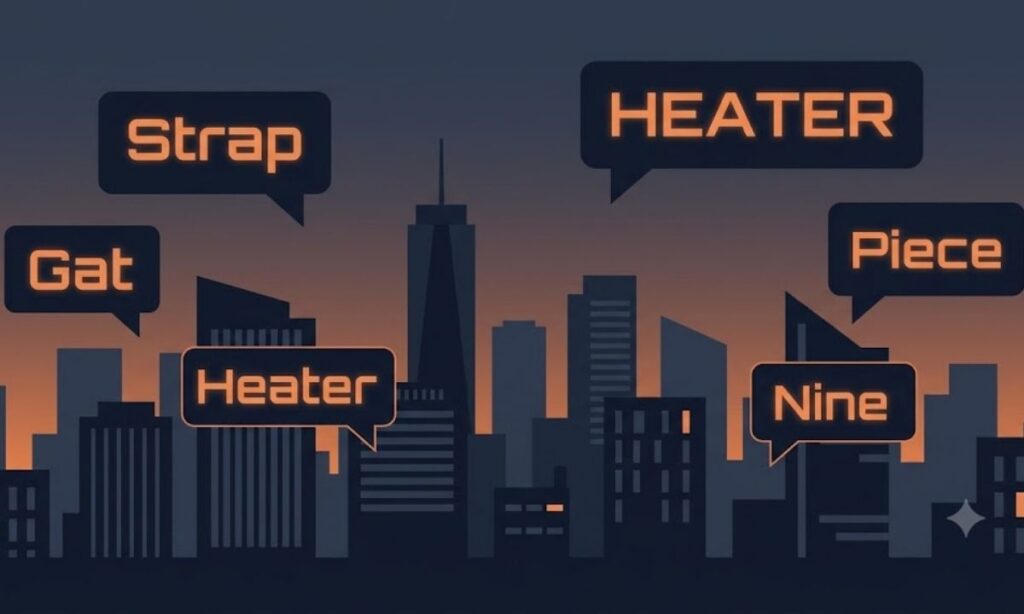
Below is a closer look at each term, what it means, and how it’s used in a real sentence.
Piece
“Piece” is one of the oldest and most recognizable slang words for a handgun. It’s been used in crime fiction, police dialogue, and hip-hop for decades.
Example: “He kept his piece tucked in his waistband.”
Strap
“Strap” refers to a gun someone carries, usually for protection. The word likely comes from the idea of strapping a weapon to the body for quick access.
Example: “Don’t worry, I’ve got my strap with me.”
Heater
“Heater” is a dramatic, movie-style term for a gun, often used in storytelling or gritty dialogue rather than everyday conversation.
Example: “He pulled out his heater and everyone froze.”
Tool
“Tool” is a subtle, indirect way to refer to a weapon without naming it outright. It’s often used when someone wants to keep the conversation vague.
Example: “You bring the tool?” “Yeah, it’s in the bag.”
Burner
A “burner” is a gun meant to be disposable or hard to trace — a term that shows up frequently in crime movies and older rap songs.
Example: “Why keep the same one? It’s just a burner.”
Glock
“Glock” is technically a brand name, but it’s used generically to mean any pistol, similar to how “Kleenex” means tissue.
Example: “He said he had a Glock on him.”
Blaster
“Blaster” has a playful, almost sci-fi ring to it. It’s popular in gaming communities and among younger audiences who use it casually.
Example: “That in-game blaster wipes out everyone.”
Also Read This : What Is Huzoxhu4.f6q5-3d? Meaning, Problems, Causes, and Solutions
Cannon
“Cannon” describes a gun that looks or sounds unusually large or powerful — sometimes used sarcastically for an oversized handgun.
Example: “That thing’s a cannon, not a pistol.”
Iron
“Iron” is an older slang term for a firearm, tied to the literal metal construction of early guns. It’s fallen out of everyday use but still appears in period dialogue.
Example: “Back in the day, everyone called their gun ‘iron.'”
Roscoe
“Roscoe” is vintage gangster slang from the early-to-mid 1900s. It rarely appears in modern conversation but still shows up in classic film references.
Example: “The old detective still called his gun a roscoe.”
Nine
“Nine” refers specifically to a 9mm pistol, one of the most common handgun calibers, and it’s a favorite reference in rap lyrics.
Example: “He pulled the nine out of his jacket.”
Chopper
“Chopper” usually describes an automatic or rapid-firing weapon, valued in rap slang for its aggressive sound and imagery.
Example: “They said he was riding with a chopper.”
Bangstick
“Bangstick” is an informal, half-joking term for a gun, often used for dramatic or humorous effect rather than serious conversation.
Example: “He’s not messing around — he’s got his bangstick.”
Rod
“Rod” is classic street slang for a gun, common in older crime fiction and now largely fading from everyday use.
Example: “Why’s he nervous? He forgot his rod at home.”
Stick
“Stick” typically refers to a rifle or long gun rather than a handgun, and it’s trending again in newer slang usage.
Example: “He pulled out the stick and everyone backed up.”
Smoke
“Smoke” implies gun violence or a threat, often used as a challenge in tense conversations.
Example: “You want smoke?” “Not today.”
Blam
“Blam” is a sound-effect word standing in for gunfire, popular in memes, captions, and short-form video content.
Example: “He said one word, and — blam!”
Popper
“Popper” is informal slang for a small gun, mentioned casually rather than seriously.
Example: “Is that thing even real?” “Just a little popper.”
Shooter
“Shooter” refers to a person carrying or using a gun rather than the weapon itself, common in both slang and news reporting.
Example: “They said they’re sending a shooter.”
Heat
“Heat” is one of the most widely used terms for a gun someone carries, often implying readiness or protection.
Example: “You walking home alone?” “Relax, I got the heat with me.”
Boomstick
“Boomstick” is a playful term for a gun, especially a shotgun, and gained extra popularity through movies and pop culture.
Example: “That thing’s basically a boomstick.”
Blower
“Blower” is a regional slang term for a gun, less common in the U.S. and more associated with certain UK street slang circles.
Example: “He mentioned having a blower on him.”
Pocket Rocket
“Pocket Rocket” describes a small, easily concealed handgun — the name plays on both size and firepower.
Example: “That little pocket rocket packs a punch.”
Lead Spitter
“Lead Spitter” is descriptive slang for an automatic or rapid-fire weapon, referencing the bullets (“lead”) it releases.
Example: “That lead spitter went off fast.”
Blam Blam
“Blam Blam” is an emphasized, repeated version of “blam,” often used in memes and captions to represent multiple gunshots.
Example: “The video just went blam blam and everyone scattered.”
Strap Piece
“Strap Piece” is a rarer, combined slang term that stacks “strap” and “piece” for emphasis, meaning someone is clearly armed.
Example: “He’s rolling with his strap piece today.”
Clicker
“Clicker” is Gen Z slang named after the trigger or hammer sound, trending across TikTok captions and gaming chats.
Example: “He was flashing his clicker in the video.”
Gat
“Gat” is a classic piece of hip-hop slang for a gun that has stayed relevant since the 1990s and is still widely recognized today.
Example: “He mentioned carrying a gat for protection.”
Six-Shooter
“Six-Shooter” refers specifically to a revolver holding six rounds, a term rooted in Western films and cowboy culture.
Example: “The old sheriff always carried a six-shooter.”
Striker
“Striker” is niche slang implying a gun that’s ready to fire, sometimes tied to the striker mechanism found in many modern pistols.
Example: “He kept his striker close, just in case.”
Gatling
“Gatling” references rapid-fire weapons, inspired by the historic Gatling gun, and is mostly used in a pop-culture or exaggerated sense today.
Example: “He joked that his rifle sounded like a Gatling gun.”
Generational Slang Comparison
Slang shifts fast, and gun-related terms are no exception. Here’s how usage tends to break down across generations.
| Generation | Common Terms | Where It’s Heard |
| Boomers / Gen X | Roscoe, Iron, Six-Shooter, Rod | Old films, detective novels |
| Millennials | Strap, Heater, Nine, Gat, Burner | 90s–2000s rap, crime dramas |
| Gen Z | Blaster, Clicker, Blam, Pocket Rocket | TikTok, gaming chats, memes |
Older terms like “roscoe” and “iron” have mostly faded into nostalgia, while newer, punchier words like “clicker” and “blam” spread quickly through short-form video and online captions.
How to Use Slang Naturally Without Sounding Awkward
Using slang the right way is about context as much as vocabulary. A few tips:
- Match the setting. Casual slang belongs in casual conversation — not in professional emails, résumés, or classroom writing.
- Know your audience. A term that lands well in one friend group or region might confuse someone else entirely.
- Don’t overdo it. Stacking multiple slang words in one sentence often sounds forced rather than natural.
- Watch the tone. Some terms (like “blam” or “clicker”) work fine in a joking context but feel out of place in serious discussions.
- Stay current. Outdated words like “roscoe” can come across as try-hard if used around younger audiences.
Where Gun Slang Comes From
Most gun slang didn’t appear overnight — it built up over decades through storytelling, music, and regional dialects.
Music, Movies, and Pop Culture
Rap lyrics, gangster films, and crime dramas have shaped much of today’s gun vocabulary. Words like “chopper,” “heater,” and “strap” became mainstream largely because artists and screenwriters used them repeatedly, and audiences picked them up.
Regional Differences in Gun Slang
Slang doesn’t travel the same everywhere. A term common in Southern hip-hop might be unfamiliar in a UK drill track, and UK-specific words don’t always carry the same meaning in the U.S. Assuming a word means the same thing everywhere is a common mistake.
How Slang Changes Over Time
Slang evolves the same way fashion does. Words drift in and out of popularity as new music, shows, and online trends take over. What sounded fresh a decade ago (like “roscoe”) can feel dated today, while newer terms (like “clicker”) spread fast through social media.
Gun Slang in Texting and Social Media
Online spaces move quickly, and gun slang has adapted right along with them.
Common Terms Used in Online Conversations
Texting and social captions tend to favor short, punchy words: nine, heat, strap, blam, and clicker show up often because they’re quick to type and easy to recognize.
Slang vs. Literal Gun Terminology
Slang words are informal stand-ins, not technical descriptions. A “nine” simply means a 9mm pistol in casual speech, while actual firearm terminology (caliber, action type, model) is far more precise and used in professional or legal contexts.
How Context Changes the Meaning
Some words carry double meanings. “Banger,” for example, means a great song in most American slang but can refer to a weapon in other contexts. Reading the surrounding conversation matters more than the word alone.
Common Slang Mistakes
- Using outdated terms with younger audiences. Words like “roscoe” or “bangstick” can sound forced today.
- Mixing up regional slang. UK and US gun slang don’t always overlap in meaning.
- Using slang in formal settings. Résumés, essays, and workplace communication call for plain language.
- Assuming slang is universal. A word popular in one music scene may be unfamiliar elsewhere.
- Confusing sound-alike words. Terms like “banger” or “blower” can mean different things depending on context.
Practice Section
Fill in the blanks
- “You bring the ______?” “Yeah, it’s in the bag.” (tool / cannon)
- He kept his ______ tucked in his waistband. (piece / smoke)
- “You want ______?” “Not today.” (smoke / blower)
Choose the correct slang
- Which term refers specifically to a 9mm pistol? a) Nine b) Cannon c) Rod
- Which word is Gen Z slang tied to the trigger sound? a) Roscoe b) Clicker c) Iron
- Which term describes a disposable, untraceable gun? a) Burner b) Six-Shooter c) Striker
Rewrite in slang
- “He was carrying a gun for protection.” → “He had his ___ on him.”
- “The gunfire sound echoed in the video.” → “It went ___ in the clip.”
Conclusion
Gun slang reflects how language moves through music, film, and online culture — constantly shifting as new generations put their own spin on old words. From vintage terms like “roscoe” to trending ones like “clicker” and “blam,” each phrase carries its own history and context.
Understanding this vocabulary isn’t about promoting violence — it’s about reading between the lines of song lyrics, scripts, and everyday conversation with more clarity. Use this list as a reference, but always stay mindful of setting, audience, and tone.
FAQs
What is the most common slang word for a gun?
“Strap” and “heat” are among the most widely recognized and used terms across generations.
Is “gat” still used today?
Yes, “gat” remains popular, especially in hip-hop and casual conversation.
What does “nine” mean in slang?
It refers to a 9mm pistol, one of the most common handgun calibers.
Why do gun slang terms change over time?
Slang evolves with music, movies, and social media trends, so older words fade as newer ones take their place.
Is gun slang the same in the US and UK?
No, regional differences mean some words carry different meanings on each side of the Atlantic.
Is it okay to use gun slang in professional settings?
No, slang terms are best kept to casual conversation and should be avoided in formal or workplace communication.

I am Olivia, the passionate writer and creator behind MeaningZime, where I share meaningful insights, inspiring ideas, and engaging content about names, quotes, emotions, and life-related topics. I love exploring the deeper meanings hidden in words and turning them into easy-to-understand articles that inform and inspire readers around the world. Through MeaningZime.com, my goal is to create a place where curiosity meets knowledge and every visitor finds something valuable, relatable, and uplifting.
