
If you’ve ever pulled a card like The Tower or The Lovers and wondered why it felt so weighty, you’ve met Major Arcana. These 22 cards, numbered 0 to 21, carry the big themes of a tarot reading: love, ambition, loss, awakening, and change. Understanding Major Arcana tarot card meanings gives you a map of life’s turning points, not just a list of definitions.
Whether you’re a beginner learning your first spread or an experienced reader looking for deeper interpretations, this guide covers each card’s core meaning, symbolism, upright and reversed interpretations, and a practical lesson you can apply. Think of tarot as a mirror for reflection, not a crystal ball. The cards raise good questions, and you decide what to do with the answers.
What Is the Major Arcana in Tarot?
The Major Arcana is the set of 22 trump cards in a tarot deck. Each one represents a significant life theme or archetype, such as innocence, authority, love, surrender, or completion. When one appears, it usually points to something that matters on a deeper level than day-to-day events.
The number 22 comes from the traditional structure of the deck, which pairs 22 trumps with 56 Minor Arcana cards. The numbers 0 to 21 form a sequence, often read as a journey from naive beginnings (The Fool, 0) to wholeness (The World, XXI).
| Feature | Major Arcana | Minor Arcana |
| Number of cards | 22 | 56 |
| Focus | Life lessons, turning points, archetypes | Daily events, situations, emotions |
| Structure | Numbered 0–21 | Four suits (Wands, Cups, Swords, Pentacles) |
| Typical tone | Significant, long-term themes | Practical, short-term details |
Imagery matters as much as the name. A card’s symbols, colors, and figures shape its message, and context shapes it further. A card drawn upright generally expresses its energy openly, while a reversed card may suggest the energy is blocked, internalized, or out of balance. Interpretations vary among decks, traditions, and readers, so treat the meanings below as a trusted starting point, not the only valid reading.
The 22 Major Arcana Cards at a Glance
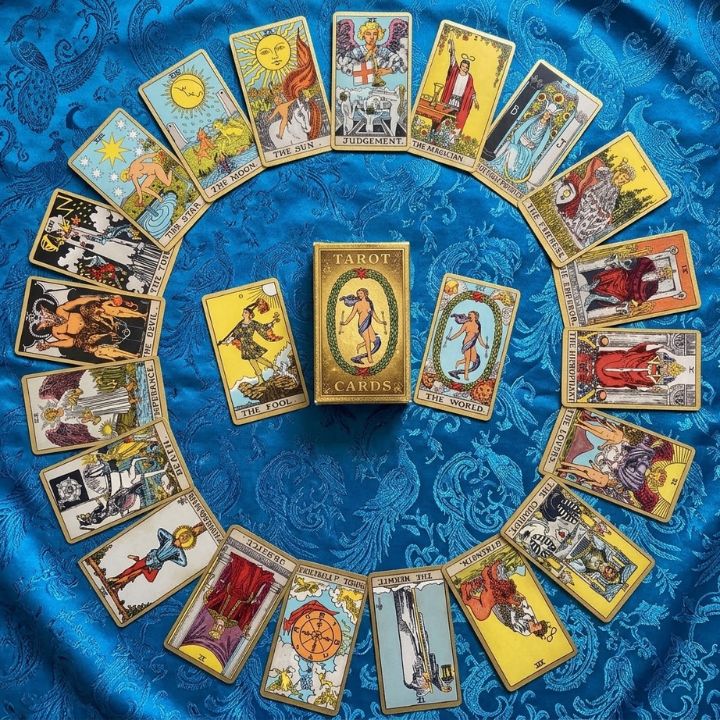
| Number | Card | Core Theme |
| 0 | The Fool | New beginnings |
| I | The Magician | Manifestation |
| II | The High Priestess | Intuition |
| III | The Empress | Nurturing abundance |
| IV | The Emperor | Structure and authority |
| V | The Hierophant | Tradition |
| VI | The Lovers | Choices and union |
| VII | The Chariot | Willpower |
| VIII | Strength | Compassionate courage |
| IX | The Hermit | Inner guidance |
| X | The Wheel of Fortune | Cycles and change |
| XI | Justice | Truth and accountability |
| XII | The Hanged Man | Surrender and perspective |
| XIII | Death | Transformation |
| XIV | Temperance | Balance |
| XV | The Devil | Attachment |
| XVI | The Tower | Upheaval |
| XVII | The Star | Hope and healing |
| XVIII | The Moon | Illusion and intuition |
| XIX | The Sun | Joy and clarity |
| XX | Judgement | Awakening |
| XXI | The World | Completion |
<!– Internal link opportunity: link each card name to your individual tarot card meaning article. –>
Major Arcana Tarot Card Meanings: The Complete Card-by-Card Guide
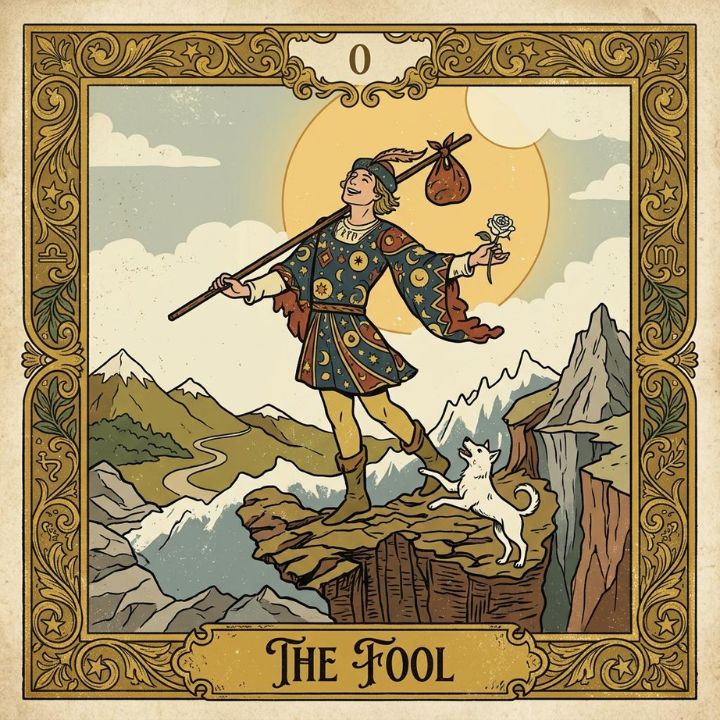
The Fool (0): Meaning, New Beginnings & Taking a Leap of Faith
Core Meaning: The Fool is the spark of a fresh start, a willingness to step forward without knowing exactly where the path leads.
Symbolism: A traveler walks toward a cliff’s edge with a small bundle, a white rose, and a loyal dog. The bright sun and open sky suggest optimism, while the dog is often read as instinct or companionship.
Upright Meaning: Think of starting a new job, moving cities, or beginning a creative project. The card encourages curiosity and trust, balanced with an honest look at the risks.
Reversed Meaning: Reversed, it may point to recklessness, fear of starting, or poor planning. Check the surrounding cards to see which applies.
Key Lesson: Courage often begins before you feel fully ready.
The Magician (I): Meaning, Manifestation & Personal Power
Core Meaning: The Magician shows that you already have the tools to turn an idea into reality.
Symbolism: One hand points up and the other down, often read as linking inspiration with action. On the table sit symbols of the four suits, and an infinity symbol floats overhead, suggesting limitless potential.
Upright Meaning: This card favors focus and initiative: pitching an idea, launching a project, or finally having a hard conversation. It rewards clear intention backed by effort.
Reversed Meaning: Reversed, it may suggest scattered energy, unused talent, or manipulation, either by others or by yourself.
Key Lesson: Potential becomes power when you act on it.
The High Priestess (II): Meaning, Intuition & Hidden Knowledge
Core Meaning: The High Priestess invites you to listen inward and trust what you sense beneath the surface.
Symbolism: She sits between two pillars, often marked B and J, before a veil decorated with pomegranates. The crescent moon at her feet connects her to mystery and cycles.
Upright Meaning: You might be picking up on something that doesn’t add up, or the best move is to wait and observe. The card values quiet, patience, and inner knowing.
Reversed Meaning: Reversed, it can mean ignoring your instincts, overthinking, or secrets that haven’t come to light.
Key Lesson: Not every answer arrives loudly; some wait for stillness.
The Empress (III): Meaning, Fertility, Creativity & Abundance
Core Meaning: The Empress represents nurturing growth, whether that’s a family, a creative project, or your own wellbeing.
Symbolism: She reclines in a lush field of ripe wheat, wearing a crown of stars. A heart-shaped shield bearing the symbol of Venus points to love, beauty, and the natural world.
Upright Meaning: Expect themes of creativity, comfort, self-care, and generosity. It can also literally relate to pregnancy or parenting, though it isn’t limited to that.
Reversed Meaning: Reversed, it may suggest creative blocks, neglecting your needs, smothering others, or dependence.
Key Lesson: Caring for something well, including yourself, helps it flourish.
The Emperor (IV): Meaning, Authority, Structure & Stability
Core Meaning: The Emperor stands for order, leadership, and the discipline needed to build something lasting.
Symbolism: He sits on a stone throne carved with rams’ heads, holding an ankh scepter and an orb, with barren mountains behind him. Red robes suggest drive and command.
Upright Meaning: This card supports clear boundaries, strategic planning, and taking responsibility, such as creating a budget or leading a team with fairness.
Reversed Meaning: Reversed, it can signal rigidity, control issues, or a lack of structure and follow-through.
Key Lesson: Strong foundations free you to build with confidence.
The Hierophant (V): Meaning, Tradition, Spirituality & Wisdom
Core Meaning: The Hierophant represents established systems of belief, learning, and shared values.
Symbolism: A robed teacher sits between pillars wearing a triple crown, with two crossed keys at his feet and two followers before him. These images evoke teaching, spiritual authority, and initiation.
Upright Meaning: It may suggest seeking a mentor, joining a community, or honoring a ritual or tradition that gives life meaning.
Reversed Meaning: Reversed, it often points to questioning convention, outgrowing a belief system, or blind conformity.
Key Lesson: Tradition can guide you, but you should understand why you follow it.
The Lovers (VI): Meaning, Love, Relationships & Important Choices
Core Meaning: The Lovers is about alignment of values, meaningful connection, and choices that reflect who you are.
Symbolism: In the Rider-Waite-Smith imagery, two figures stand beneath an angel, with a tree bearing a serpent behind one and a flaming tree behind the other. These evoke temptation, passion, and responsibility.
Upright Meaning: In relationships, it points to honest connection. Outside romance, it highlights decisions where your integrity is at stake, like choosing between two job offers.
Reversed Meaning: Reversed, it may suggest misalignment, indecision, or avoiding a choice.
Key Lesson: The best choices honor your values, not just your desires.
The Chariot (VII): Meaning, Ambition, Willpower & Determination
Core Meaning: The Chariot is victory through focus, discipline, and the ability to steer opposing forces in one direction.
Symbolism: An armored figure rides a canopy-covered chariot pulled by two sphinxes, one light and one dark, representing conflicting impulses brought under control.
Upright Meaning: It supports pursuing a demanding goal, like training for an event or finishing a degree, through steady determination.
Reversed Meaning: Reversed, it can mean lost direction, aggression, or a lack of control over competing demands.
Key Lesson: Momentum comes from directing your energy, not just having it.
Strength (VIII): Meaning, Inner Strength, Courage & Compassion
Core Meaning: Strength shows that true power is gentle, patient, and rooted in self-awareness.
Symbolism: A woman calmly closes or soothes a lion’s mouth, with an infinity symbol above her head. The scene suggests mastery of instinct through compassion rather than force.
Upright Meaning: It appears when handling a stressful situation with grace, setting boundaries without hostility, or working through fear.
Reversed Meaning: Reversed, it may indicate self-doubt, suppressed emotions, or losing composure.
Key Lesson: Calm persistence often outlasts force.
The Hermit (IX): Meaning, Solitude, Self-Reflection & Inner Wisdom
Core Meaning: The Hermit calls for stepping back to find clarity within.
Symbolism: A cloaked figure on a snowy peak holds a lantern containing a six-pointed star and a staff, lighting only the next step ahead.
Upright Meaning: This might be a season for solitude, journaling, or reassessing your direction after a busy chapter.
Reversed Meaning: Reversed, it can suggest isolation that has become unhealthy, or avoiding the reflection you need.
Key Lesson: Clarity often comes when the noise fades.
The Wheel of Fortune (X): Meaning, Change, Fate & Life Cycles
Core Meaning: The Wheel reminds us that life moves in cycles, and circumstances rarely stay fixed.
Symbolism: A great wheel inscribed with letters and symbols turns in the sky, surrounded by figures, including a sphinx, a serpent, and an Anubis-like figure, with four winged creatures in the corners.
Upright Meaning: It often signals a shift in luck or timing, such as an unexpected opportunity. It also asks you to adapt rather than cling.
Reversed Meaning: Reversed, it may suggest resisting change, feeling stuck, or a temporary setback.
Key Lesson: You can’t control the turning, but you can choose how you meet it.
Justice (XI): Meaning, Truth, Fairness & Accountability
Core Meaning: Justice is about honesty, cause and effect, and fair decisions made with a clear mind.
Symbolism: A seated figure holds scales in one hand and an upright sword in the other, representing balanced judgment and decisive truth.
Upright Meaning: It can relate to contracts, ethical dilemmas, or taking ownership of your part in a conflict.
Reversed Meaning: Reversed, it may suggest bias, avoiding accountability, or an unresolved imbalance.
Key Lesson: Fairness starts with honesty about your own actions.
The Hanged Man (XII): Meaning, Surrender, Sacrifice & New Perspectives
Core Meaning: The Hanged Man asks you to pause and see the situation from a different angle.
Symbolism: A man hangs upside down from a tree by one foot, calm, with a halo around his head. His serenity suggests a chosen surrender, not suffering.
Upright Meaning: It fits times when forcing progress won’t work, such as waiting for a decision or letting go of a rigid plan.
Reversed Meaning: Reversed, it can indicate stalling, needless sacrifice, or resistance to a necessary shift.
Key Lesson: Sometimes stillness reveals what effort cannot.
Death (XIII): Meaning, Transformation, Endings & New Beginnings
Core Meaning: Death signifies the end of a chapter and the transformation that follows, not literal death.
Symbolism: A skeleton in armor rides a white horse beneath a black banner marked with a white rose, while a sun rises between two towers in the distance.
Upright Meaning: It may mark the close of a job, relationship, or old habit, making space for something new.
Reversed Meaning: Reversed, it often points to resisting an ending or lingering in what’s already over.
Key Lesson: Letting go is often the doorway to renewal.
Temperance (XIV): Meaning, Balance, Patience & Harmony
Core Meaning: Temperance is the art of blending opposites into something steady and whole.
Symbolism: An angel pours water between two cups, with one foot on land and one in water. A path leads toward a glowing horizon.
Upright Meaning: It supports moderation, healing, and patient progress, such as finding a sustainable pace between work and rest.
Reversed Meaning: Reversed, it can suggest excess, impatience, or lifestyle imbalance.
Key Lesson: Steady, measured effort creates lasting harmony.
The Devil (XV): Meaning, Temptation, Attachments & Personal Freedom
Core Meaning: The Devil highlights the habits, fears, or dependencies that feel hard to escape.
Symbolism: A horned figure looms above two chained figures. Notably, the chains around their necks are loose, suggesting the bondage may be self-imposed.
Upright Meaning: It might point to unhealthy patterns, compulsions, or relationships built on control rather than trust.
Reversed Meaning: Reversed, it often signals breaking free, though the process may feel uncomfortable.
Key Lesson: Naming what binds you is the first step to freedom.
The Tower (XVI): Meaning, Sudden Change, Upheaval & Revelation
Core Meaning: The Tower shows false structures falling so something truer can be built.
Symbolism: Lightning strikes a tall tower, flames burst from its windows, and figures tumble from it. The imagery is dramatic, but the destruction clears what couldn’t last.
Upright Meaning: It may reflect a sudden shake-up, like unexpected news, a collapsed plan, or a long-avoided truth.
Reversed Meaning: Reversed, it can suggest avoiding disaster, resisting inevitable change, or a slower unraveling.
Key Lesson: What falls apart can make room for something honest.
The Star (XVII): Meaning, Hope, Healing & Renewal
Core Meaning: The Star brings calm hope after hardship, a sense that recovery is possible.
Symbolism: A woman kneels by a pool, pouring water onto land and into the pool beneath a large star surrounded by smaller ones. The scene suggests nourishment, openness, and faith.
Upright Meaning: It often follows turbulence, encouraging rest, creativity, and gentle optimism about the future.
Reversed Meaning: Reversed, it may signal discouragement, lost faith, or difficulty trusting in recovery.
Key Lesson: Hope is quieter than certainty but just as powerful.
The Moon (XVIII): Meaning, Intuition, Illusions & Uncertainty
Core Meaning: The Moon reflects uncertainty, dreams, and the parts of a situation that aren’t yet clear.
Symbolism: A full moon shines between two towers over a winding path, with a dog, a wolf, and a crayfish emerging from water, suggesting the tension between the tamed and the wild.
Upright Meaning: It may relate to anxiety, mixed signals, or the need to trust your instincts while verifying facts.
Reversed Meaning: Reversed, it can suggest confusion lifting, or fears being projected onto a situation.
Key Lesson: When things are unclear, move carefully and don’t mistake fear for fact.
The Sun (XIX): Meaning, Happiness, Success & Clarity
Core Meaning: The Sun is joy, vitality, and the relief of seeing things clearly.
Symbolism: A child on a white horse rides beneath a radiant sun with sunflowers behind, evoking innocence, warmth, and openness.
Upright Meaning: It can reflect a success, a healthy sense of confidence, or simple happiness after a difficult stretch.
Reversed Meaning: Reversed, it might suggest temporary doubt, dimmed enthusiasm, or overly cautious optimism.
Key Lesson: Let yourself enjoy what’s going well.
Judgement (XX): Meaning, Awakening, Self-Reflection & Renewal
Core Meaning: Judgement is a moment of reckoning and a call to rise into a truer version of yourself.
Symbolism: An angel blows a trumpet while figures rise from coffins with open arms. The image suggests awakening, forgiveness, and new purpose.
Upright Meaning: It might appear when you’re reflecting on the past, forgiving yourself, or answering a calling such as a career change.
Reversed Meaning: Reversed, it can suggest self-criticism, ignoring the call to change, or unresolved regrets.
Key Lesson: Learning from the past frees you to move forward.
The World (XXI): Meaning, Completion, Achievement & Fulfillment
Core Meaning: The World marks completion, integration, and the satisfaction of finishing a significant cycle.
Symbolism: A dancer moves within a laurel wreath, with four figures in the corners that are often linked to the four elements. The scene conveys wholeness and celebration.
Upright Meaning: It may reflect finishing a degree, a long project, or reaching a personal milestone, along with readiness for the next chapter.
Reversed Meaning: Reversed, it can mean a goal that’s almost complete but unfinished, or difficulty achieving closure.
Key Lesson: Completion is worth honoring, and it often opens the next beginning.
What Do the Major Arcana Cards Mean in Love and Relationships?
In love readings, Major Arcana cards work best as prompts for reflection on connection, communication, boundaries, and commitment. They can’t tell you what another person feels or guarantee an outcome like marriage, reconciliation, or a breakup.
The Lovers asks whether your choices reflect shared values. The Empress points to nurturing, affection, and care within a relationship. The Devil invites you to examine dependency, jealousy, or patterns that feel controlling. Temperance suggests balance, patience, and compromise, especially useful when two people have different rhythms. The Star often appears when you’re healing and learning to trust again.
For example, drawing The Devil in a relationship reading doesn’t mean your partner is harmful. It can simply prompt you to ask whether a habit, like constant checking in or avoiding a hard conversation, is keeping you stuck.
How to Interpret Major Arcana Cards in Career and Life Decisions
In career readings, Major Arcana cards can help you reflect on motivation, planning, and risk, though they shouldn’t replace professional advice.
The Magician suggests using your skills proactively, such as pitching a new idea. The Emperor highlights planning, leadership, and responsibility, like building a realistic business plan. The Chariot supports sustained effort toward a goal, such as preparing for a promotion. Justice encourages fair dealings and careful reading of contracts. The Tower may reflect unexpected change, like a restructuring or sudden project cancellation, and invites you to adapt. The World points to completion, such as finishing a certification or launching a long-planned product.
Use these as conversation starters with yourself. For financial, legal, or medical decisions, rely on qualified professionals, not tarot alone.
What Does It Mean When You Draw Several Major Arcana Cards?
When many Major Arcana cards show up in a spread, readers often interpret it as a sign that the question touches on significant themes, such as identity, major decisions, or turning points, rather than everyday details.
That said, the number of trump cards isn’t proof of destiny. Meaning depends on your question, the card positions, the surrounding Minor Arcana, and your own interpretive framework. A spread full of Major Arcana might simply reflect a deep or open-ended question. Treat it as a cue to slow down and reflect, not as evidence that an outcome is fixed.
How to Read Major Arcana Tarot Cards as a Beginner
A simple process can make any reading less overwhelming:
- Begin with a clear question. Open-ended questions like “What should I focus on this month?” work better than yes/no questions.
- Observe the imagery. Notice colors, figures, expressions, and symbols before reaching for a definition.
- Identify the central meaning. Recall the card’s core theme in a sentence.
- Consider upright or reversed. Decide whether the energy seems open, blocked, or internalized.
- Interpret the card in its position. A card in a “challenge” position reads differently from one in an “advice” position.
- Connect it to your question. Link the card’s theme to your actual circumstances.
- Reflect on a practical takeaway. Ask what you can do with this insight, without treating it as an absolute prediction.
Example: Suppose you ask about a job offer and draw The Hermit in the “advice” position. Its themes of reflection and solitude might suggest taking time to weigh the decision privately, rather than rushing or seeking everyone’s opinion.
How to Remember All 22 Major Arcana Tarot Cards
Learning 22 cards feels manageable when you break them into groups:
- Group by theme. For example, cards of change (Wheel of Fortune, Death, Tower), cards of inner work (High Priestess, Hermit, Hanged Man), and cards of outcome (Sun, Judgement, World).
- Use flashcards. Put the image on one side and keywords on the other.
- Keep a tarot journal. Record what you notice, feel, and think about each card.
- Study the sequence. Seeing how each card follows the last builds a story you can recall.
- Draw one card daily. Reflect on how it appeared in your day.
Many readers use the Fool’s Journey, the traditional idea that The Fool travels through each card, meeting teachers, challenges, and milestones, until reaching The World. It’s a helpful memory aid, though interpretations of this framework vary among readers and traditions.
Frequently Asked Questions
What are the 22 Major Arcana tarot cards in order?
The Fool (0), The Magician, The High Priestess, The Empress, The Emperor, The Hierophant, The Lovers, The Chariot, Strength, The Hermit, Wheel of Fortune, Justice, The Hanged Man, Death, Temperance, The Devil, The Tower, The Star, The Moon, The Sun, Judgement, and The World (XXI).
What is the most powerful Major Arcana card?
No single card is universally the most powerful. The World, The Sun, and The Tower are often considered especially impactful, but a card’s significance depends on the question and spread position.
What is the difference between the Major and Minor Arcana?
The Major Arcana’s 22 cards represent significant life themes and turning points. The 56 Minor Arcana cards, divided into four suits, reflect everyday events, emotions, and circumstances.
What does it mean to pull a Major Arcana card?
It usually suggests the topic involves a significant theme or lesson. Rather than predicting a fixed outcome, it encourages deeper reflection on what the card’s archetype means for your situation.
Are reversed Major Arcana cards negative?
Not necessarily. Reversals can indicate blocked energy, internal focus, delays, or a need for reflection. Their meaning depends on the surrounding cards, the question, and the reader’s approach.
Which Major Arcana cards represent love?
The Lovers is most directly associated with love and relationships. The Empress, Temperance, and The Star also often relate to affection, balance, and emotional healing, depending on context.
What does Death mean in a tarot reading?
Death rarely signals literal death. It usually represents the end of a phase, habit, or situation, and the transformation that follows, making room for something new.
What does The Fool represent in tarot?
The Fool represents new beginnings, spontaneity, and a leap of faith. As card 0, it stands at the start of the journey, full of potential and possibility.
Can Major Arcana cards predict the future?
Tarot is better used as a tool for reflection than for guaranteed prediction. The cards can highlight themes, patterns, and possibilities, but you ultimately make your own choices.
How can beginners learn the Major Arcana?
Start by studying one card at a time, noting its imagery and keywords. Keep a journal, draw a daily card, and group cards by theme to make the sequence easier to remember.
Conclusion
Understanding all 22 Major Arcana tarot card meanings gives you a framework for reflecting on life’s biggest themes, from fresh starts and love to upheaval, healing, and completion. The more time you spend with each card’s symbolism and context, the more naturally your interpretations will develop.
Remember that tarot is a tool for self-reflection, not an unquestionable prediction. Different decks, traditions, and readers see these cards in slightly different ways, and that’s part of what makes the practice rich. Choose one card today, study its imagery, and notice what it brings up for you. You may find that the most meaningful insights come one card at a time.
I am Olivia, the passionate writer and creator behind MeaningZime, where I share meaningful insights, inspiring ideas, and engaging content about names, quotes, emotions, and life-related topics. I love exploring the deeper meanings hidden in words and turning them into easy-to-understand articles that inform and inspire readers around the world. Through MeaningZime.com, my goal is to create a place where curiosity meets knowledge and every visitor finds something valuable, relatable, and uplifting.
