
If you’ve ever had an Aussie mate call you a “drongo” with a grin on their face, you already know that Australian insults don’t always mean what they sound like. Australia has one of the most colourful slang vocabularies in the English-speaking world, and a huge chunk of it is built around gently (or not-so-gently) roasting each other.
This guide breaks down 33 of the most common Australian slang insults, explains what they actually mean, shows you how and when to use them, and helps you tell the difference between a harmless roast and a genuine insult. Whether you’re planning a trip to Australia, chatting with Aussie friends online, or just curious about “Down Under” culture, this is your complete 2026 reference.
Quick Reference Table
Here’s a fast cheat sheet before we dive into the details. Bookmark this table if you just need a quick meaning check.
| Slang Term | Meaning | Severity | Typical Use |
| Bogan | Unrefined, low-class person | Mild–Medium | Casual teasing |
| Drongo | Fool, idiot | Mild | Friendly banter |
| Wanker | Arrogant, self-important person | Medium–Strong | Frustration or mockery |
| Nong | Silly person, goof | Mild | Light teasing |
| Dropkick | Useless or hopeless person | Mild–Medium | Joking put-down |
| Galah | Loud, silly person | Mild | Affectionate ribbing |
| Dill | Idiot, simpleton | Mild | Playful jab |
| Mug | Gullible or foolish person | Mild | Cheeky insult |
| Tool | Arrogant idiot | Medium | Calling out bad behaviour |
| Goose | Silly, clumsy person | Mild | Friendly mockery |
| Tosser | Annoying, self-important person | Medium | British-Aussie crossover |
| Ratbag | Mischievous troublemaker | Mild | Affectionate scolding |
| Dag | Unfashionable or dorky person | Mild | Endearing tease |
| Deadset Drongo | Absolute idiot (emphasised) | Medium | Strong frustration |
| Clown | Someone acting foolishly | Mild–Medium | Mocking behaviour |
| Bugger | Mild exclamation or insult | Very Mild | General annoyance |
| Bludger | Lazy person who avoids work | Medium | Calling out laziness |
| Dipstick | Idiot, dimwit | Mild | Light-hearted jab |
| Sook | Cry-baby, overly sensitive person | Mild | Teasing complainers |
Australian Slang Insults Explained
Below is a detailed breakdown of each term, including origin, meaning, and real-world usage.
Slang: Bogan
A bogan is Australia’s version of “redneck” or “white trash,” used to describe someone seen as unrefined, uncultured, or low-status. It can reference fashion choices, accents, or general lifestyle. Interestingly, many Australians now use “bogan” proudly, almost as a badge of honour rather than a pure insult.
- Example: “Did you see his ute? Full bogan setup, mate.”
- Tone: Can be affectionate or mocking depending on context.
Slang: Drongo
A drongo is a classic Aussie word for someone who’s done something foolish. The term is believed to come from a racehorse in the 1920s that never won a race, so “drongo” became shorthand for a hopeless failure.
- Example: “You left the car unlocked overnight, you drongo.”
- Tone: Usually light and humorous.
Slang: Wanker
One of the stronger insults on this list, a wanker is someone arrogant, self-obsessed, or showing off. It has British roots but is widely used across Australia, often paired with hand gestures for extra emphasis.
- Example: “He wouldn’t stop bragging about his promotion — total wanker.”
- Tone: Sharper and more critical than most terms here.
Slang: Nong
A nong is a gentler cousin of “drongo,” used for someone who’s being a bit silly or scatterbrained rather than genuinely foolish.
- Example: “Stop being a nong and grab your keys.”
- Tone: Playful, low-stakes.
Slang: Dropkick
A dropkick refers to someone considered useless, hopeless, or a bit of a loser — often applied to people who never seem to get their act together.
- Example: “That bloke’s a bit of a dropkick, always late for everything.”
- Tone: Mildly mocking.
Slang: Galah
Named after the noisy pink-and-grey Australian bird, a galah describes someone loud, silly, or a bit of a show-off. It’s often used affectionately within families.
- Example: “You flaming galah, you nearly knocked over the barbecue.”
- Tone: Warm, familiar teasing.
Slang: Dill
Short and simple, a dill is basically another word for a fool or simpleton, usually used without real malice.
- Example: “Don’t be a dill, read the instructions first.”
- Tone: Light-hearted.
Slang: Mug
A mug is someone easily fooled, gullible, or a bit naive — similar to calling someone a “sucker” in American English.
- Example: “Only a mug would fall for that scam.”
- Tone: Slightly condescending but casual.
Slang: Tool
A tool is a more modern insult for someone acting entitled, arrogant, or just plain annoying — think of the person who cuts you off in traffic and then acts offended.
- Example: “He acted like such a tool at the meeting.”
- Tone: Medium sting, often used seriously.
Slang: Goose
A goose is someone who’s a bit clumsy, silly, or accident-prone. It’s rarely meant to be cruel.
- Example: “You tripped over your own feet again, you goose.”
- Tone: Gentle, affectionate.
Slang: Tosser
Closely related to “wanker,” a tosser describes someone irritating, self-important, or generally unpleasant to be around.
- Example: “That tosser cut in line right in front of me.”
- Tone: Firm and dismissive.
Slang: Ratbag
A ratbag is a mischievous person or a lovable troublemaker — often used for cheeky kids or friends who like stirring up trouble.
- Example: “You little ratbag, who let the dog out?”
- Tone: Endearing, rarely serious.
Slang: Dag
A dag refers to someone unfashionable, nerdy, or a bit awkward in a charming way. It’s actually one of the more affectionate terms on this list.
- Example: “He wore socks with sandals — such a dag.”
- Tone: Fond, not harsh.
Slang: Deadset Drongo
Adding “deadset” (meaning “absolutely” or “seriously”) in front of “drongo” intensifies the insult, turning it into “an absolute fool.”
- Example: “You forgot the tickets? You deadset drongo!”
- Tone: Stronger frustration, but still generally friendly.
Slang: Clown
Borrowed from broader English slang, calling someone a clown in Australia means they’re acting foolishly or embarrassing themselves.
- Example: “Stop clowning around and take this seriously.”
- Tone: Mild to moderate mockery.
Slang: Bugger
One of Australia’s most versatile words, “bugger” can be an insult, an exclamation of frustration, or even an affectionate nickname depending on tone.
- Example: “You cheeky bugger, you ate my lunch.”
- Tone: Very mild, often not an insult at all.
Slang: Bludger
A bludger is someone lazy who avoids work and often relies on others to carry the load — one of the harsher labels in everyday Aussie speech.
- Example: “He never helps with chores, total bludger.”
- Tone: Genuine criticism, not always playful.
Slang: Dipstick
Another word for a fool or dimwit, dipstick is used much like “drongo” or “dill,” usually without real malice.
- Example: “You put the SIM card in upside down? Dipstick.”
- Tone: Light, joking.
Slang: Sook
A sook is someone who complains excessively, cries easily, or acts overly sensitive about minor issues.
- Example: “Don’t be such a sook, it’s just a scratch.”
- Tone: Teasing, sometimes a little pointed.
What Do Australian Insults Actually Mean?
Most Australian slang insults aren’t meant to genuinely wound the other person. They’re built on a culture of self-deprecating humour and mateship, where roasting a friend is often a sign of closeness rather than dislike. Words like “drongo,” “galah,” and “dag” are frequently used between people who like each other, functioning more like a nudge or a joke than a real attack.
That said, context matters enormously. The same word can shift from a harmless jab to a genuine put-down depending on tone, relationship, and setting. Understanding this distinction is key to using Aussie slang naturally and appropriately.
Australian Slang Insults vs. Friendly Aussie Banter
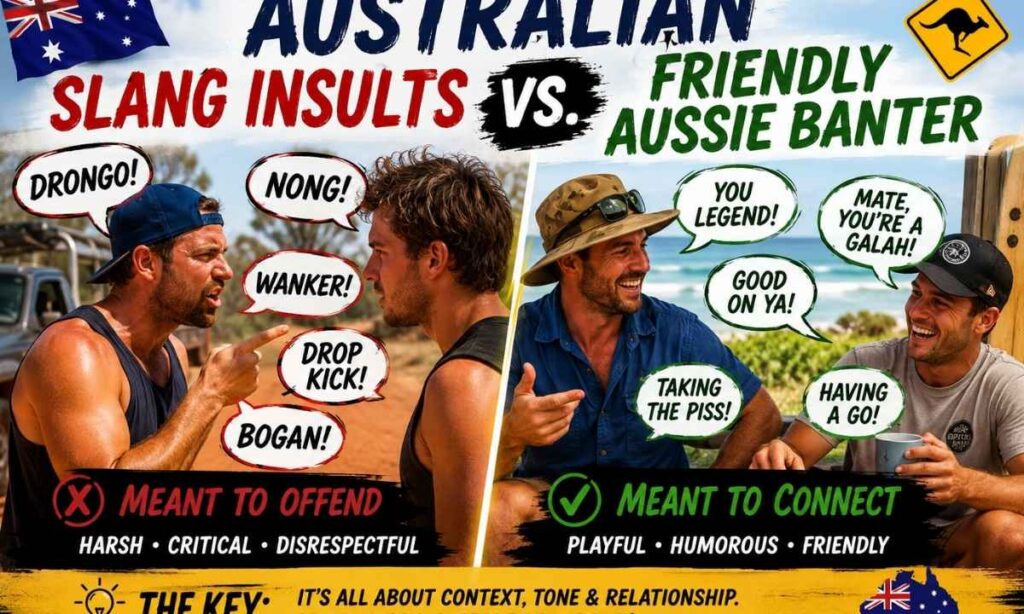
It’s easy to confuse a real insult with harmless Aussie banter if you’re not familiar with the culture. Here’s a simple breakdown:
| Feature | Genuine Insult | Friendly Banter |
| Tone of voice | Sharp, cold, serious | Playful, exaggerated |
| Relationship | Strangers or conflict | Friends, family, colleagues |
| Follow-up | Silence or tension | Laughter, joking back |
| Word choice | “Wanker,” “bludger,” “tosser” | “Drongo,” “galah,” “dag” |
| Setting | Arguments, confrontations | Casual hangouts, pubs, sport |
If you’re ever unsure whether you’re being insulted or affectionately roasted, pay attention to body language and whether the group is laughing along.
Generational Slang Differences
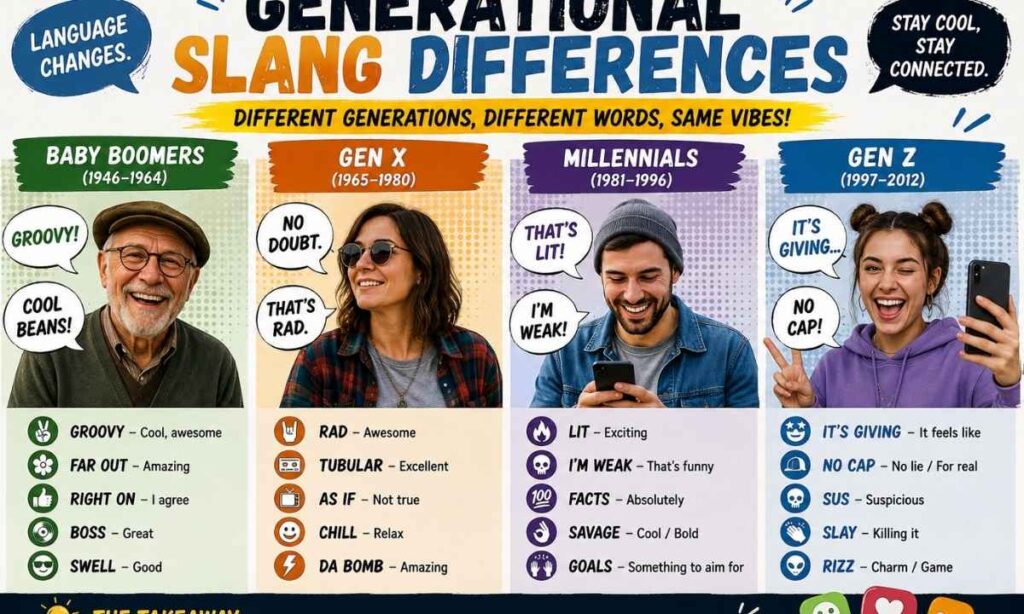
Like any living language, Australian slang shifts across generations. Here’s how usage tends to differ.
Gen Z
Younger Australians often mix traditional insults with newer internet-influenced slang, using terms like “goose” and “clown” more casually online, frequently softened with humour or memes rather than face-to-face confrontation.
Millennials
Millennials tend to blend classic Aussie insults such as “bogan,” “drongo,” and “wanker” with modern sarcasm, often reviving older terms through social media and pop culture references.
Older Generations
Older Australians are more likely to use terms like “galah,” “ratbag,” and “dag” in everyday face-to-face conversation, often with a nostalgic, warm tone that reflects decades of use within families and communities.
How to Use Australian Slang Naturally Without Sounding Awkward
If you want to use these terms convincingly rather than sounding like you’re reading from a phrasebook, keep the following in mind:
- Match the tone of the group. Slang insults work best in relaxed, joking environments.
- Start with mild terms. Words like “drongo,” “dag,” or “goose” are safer starting points than “wanker” or “bludger.”
- Watch for reciprocity. If someone roasts you back, you’re in friendly territory.
- Use it sparingly at first. Overusing slang can feel forced, especially to native speakers.
- Pair it with a smile or laugh. Delivery matters as much as word choice.
Common Slang Mistakes
- Using strong insults with strangers. Words like “tosser” or “bludger” can land as genuinely rude outside of friendly circles.
- Mixing up regional usage. Some terms are more common in certain states or among certain age groups.
- Using slang in formal writing. Emails, resumes, and professional communication should avoid these terms entirely.
- Assuming every insult is friendly. Tone and relationship always outweigh the literal word.
- Overloading a sentence with slang. Natural speech uses one or two terms, not five in a row.
Practice Section
Test your understanding of Australian slang insults with these quick exercises.
Fill in the Blanks
- “You left your umbrella at home again? You total _____.” (drongo/mug)
- “Stop being such a _____, it’s just a paper cut.” (sook/bogan)
- “He wouldn’t stop showing off his new watch — what a _____.” (wanker/dag)
Choose the Correct Slang
Question: Which word best describes someone lazy who avoids doing their share of work? A) Galah B) Bludger C) Goose
Question: Which term is generally considered the harshest on this list? A) Dag B) Wanker C) Ratbag
Rewrite the Formal Sentence Into Slang
- Formal: “He is being extremely arrogant and self-important.”
- Slang version: “He’s being a total wanker.”
- Formal: “She made a foolish mistake by forgetting the tickets.”
- Slang version: “She was a proper drongo forgetting the tickets.”
Conclusion
Australian slang insults are less about cruelty and more about culture — a shorthand for mateship, humour, and shared identity. From the mild sting of “dag” to the sharper edge of “wanker,” each term carries its own history, tone, and social context. Once you understand when and how these words are used, you’ll be able to spot the difference between a genuine insult and a classic Aussie roast, and maybe even throw a few of these terms around yourself with confidence.
FAQs
What is the most common Australian slang insult?
“Bogan” and “drongo” are among the most widely used and recognised Australian slang insults.
Is “bogan” always an insult in Australia?
Not always — many Australians use it self-deprecatingly or as a term of endearment among friends.
What’s the harshest Australian slang insult?
“Wanker” and “tosser” are generally considered the strongest insults on this list.
Can tourists use Australian slang insults safely?
Yes, if used lightly with friendly locals, but it’s best to start with milder terms like “drongo” or “dag.”
Why do Australians insult their friends as a joke?
It reflects a cultural style of humour called “banter,” where teasing signals closeness rather than dislike.
Is “galah” an offensive word?
It’s mild and usually affectionate, often used within families rather than as a serious insult.
Do younger Australians still use these slang terms?
Yes, though Gen Z often blends traditional slang with newer internet-driven expressions.

I am Olivia, the passionate writer and creator behind MeaningZime, where I share meaningful insights, inspiring ideas, and engaging content about names, quotes, emotions, and life-related topics. I love exploring the deeper meanings hidden in words and turning them into easy-to-understand articles that inform and inspire readers around the world. Through MeaningZime.com, my goal is to create a place where curiosity meets knowledge and every visitor finds something valuable, relatable, and uplifting.
