

January meaning is easy to state in one line: January is the first month of the year, and its name comes from Janus, the Roman god of beginnings, doorways, and transitions. The month has 31 days, and it opens the calendar year in the Gregorian calendar that most of the world uses today. January 2027 begins on Friday, January 1, and ends on Sunday, January 31. People link the month with fresh starts, new goals, and a clean page, and that link comes straight from the god it is named after. Janus had two faces, one that looked back at the past and one that looked ahead to the future, so January sits at the doorway between the year that just ended and the year that just began.
January Meaning in Simple Words
January meaning starts with a simple fact: January is month one. It is the first page of the calendar, and it carries the fresh start feeling that comes with a new year. The word itself means the month of Janus, and Janus was the Roman god who watched over doors, gates, and every kind of beginning. That is why the month feels like a doorway. You close one year behind you, and you step through into a new one.
In plain use, January means the start of something. When people say January, they often mean new plans, new habits, and a fresh try at a goal. December closes the old year, and the New Year begins in January. The month holds New Year celebrations, winter weather in the north, and summer heat in the south. In the Northern Hemisphere, January is the second month of winter and, on average, the coldest month of the year. In the Southern Hemisphere, it is the second month of summer and, on average, the warmest month of the year. The same month can mean snow in one place and sunshine in another.
January also means a time to look back and look ahead at the same time. That habit comes from Janus and his two faces. People review the year that passed, and they set goals for the year ahead. Resolutions, planners, and fresh calendars all belong to January for this reason. The month is short in daylight in the north, yet it carries more hope than any other month of the year.
Where Does the Name January Come From?
The name January comes from Janus, the Roman god of beginnings and transitions. In Latin, the month was called Ianuarius, which means the month of Janus. The root word is ianus, which means doorway or arched gateway. Janus was the god of doors, gates, and passages, and he also watched over the rising and setting of the sun. His name is the source of the word janitor as well, since a janitor was first a keeper of the gate.
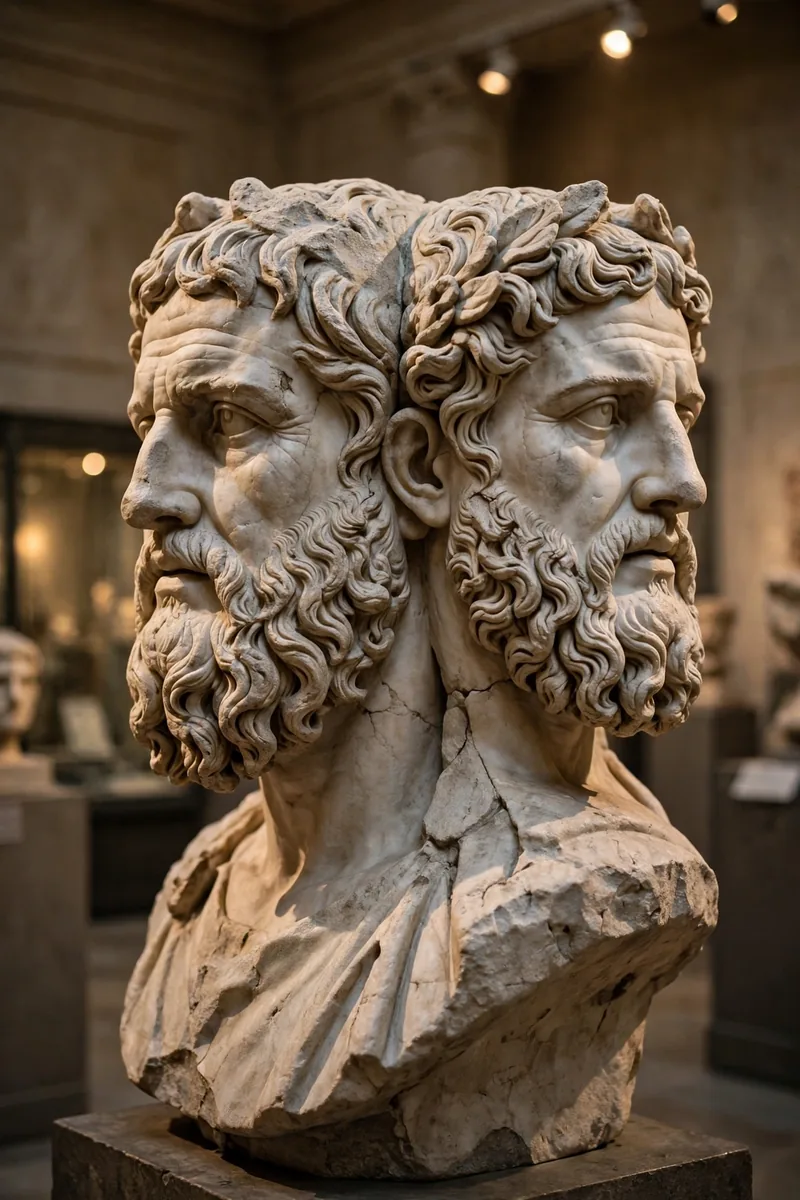
Janus is shown with two bearded faces that point in opposite directions. One face looks back toward the past, and the other face looks forward toward the future. That image fits the first month of the year well, since January looks back at the old year and ahead to the new one. The god was also linked with war and peace, since the gates of his temple in Rome were opened in times of war and closed in times of peace.
January was not always part of the Roman calendar. The oldest Roman calendar had only ten months and 304 days, and it started in March. Winter was treated as a month-less period, with no months at all. Around 713 BC, King Numa Pompilius is said to have added January and February, so the calendar covered the full lunar year of 354 days. January first had 29 days. Later, in 46 BC, Julius Caesar reformed the calendar and gave January 31 days, which it still has today.
The month also left its mark on the map. When a Portuguese expedition landed at Guanabara Bay in South America on January 1, 1502, the crew named the place Rio de Janeiro, which means River of January. The city still carries that name today, and it is one of the best known place names that comes from this month.
Why Is January the First Month of the Year?
January became the first month of the year in 153 BC. Before that change, the Roman year started in March, and each year was named after the two consuls who took office. In 153 BC, a rebellion forced the Roman senate to move the start of the civil year to January 1, when the new consuls entered office. From that point on, January stood at the head of the calendar year.
The change took time to spread. In the 16th century, European countries began to make January 1 the official start of the new year once again. Some places kept March 25 or other dates for centuries, but January 1 won out in the end. Today, the Gregorian calendar starts on January 1 in nearly every country in the world.
There is a fitting logic to the choice. January is named after the god of beginnings, so it makes sense for the year to begin in the month of beginnings. The old year ends in December, and the new year opens with the month that means a doorway. That is why the turn of the year feels like a fresh start, and why January carries the weight of new plans and new hopes.
What Does January Symbolize?
January symbolizes new beginnings above all else. The month stands for a fresh start, a clean page, and a second chance. People make resolutions in January because the month itself means a beginning. A new calendar, a new diary, and a new plan all feel right in the first days of the year.
January also symbolizes reflection. Janus looked both ways, and January invites people to do the same. You look back at what worked and what did not, and you look ahead at what you want to change. That two-way look is the heart of the month. It is a time for honest review and for quiet hope.
The month also stands for patience and endurance. In the north, January is deep winter, with short days and long nights. Plants rest, animals shelter, and people spend more time indoors. Yet the light grows a little longer each day after the winter solstice, so January also carries the first small sign that spring will come. That mix of cold and hope is part of what January means.
In short, January means a doorway. It means the end of one chapter and the start of the next. It means looking back with honesty and looking forward with hope, and it means taking the first step into a new year.
January 2027: Key Dates to Know
January 2027 runs from Friday, January 1, to Sunday, January 31. It has 31 days, and it holds two United States federal holidays, a full moon, and one of the best meteor showers of the year. These are the eight key dates to know.
- Friday, January 1, 2027: New Year’s Day, a federal holiday in the United States, and the first day of the month and the year.
- Sunday, January 3, to Monday, January 4, 2027: The Quadrantid meteor shower reaches its peak, with bright fireballs in a dark sky.
- Wednesday, January 6, 2027: Epiphany, also called Three Kings Day, which marks the visit of the Magi.
- Thursday, January 7, 2027: New moon, and Orthodox Christmas, which many Orthodox churches observe on this day.
- Friday, January 15, 2027: First quarter moon, and the birthday of Martin Luther King Jr., who was born on January 15, 1929.
- Monday, January 18, 2027: Martin Luther King Jr. Day, a federal holiday in the United States, observed on the third Monday of January.
- Friday, January 22, 2027: Full moon, the Wolf Moon, at 7:17 a.m. Eastern time, which is 12:17 p.m. UTC.
- Friday, January 29, 2027: Last quarter moon, and the final weekend of the month begins.
January Holidays in 2027
The two federal holidays in January 2027 are New Year’s Day and Martin Luther King Jr. Day. New Year’s Day follows New Year’s Eve, the last night of the old year. New Year’s Day falls on Friday, January 1, so it opens the year with a three-day weekend for many workers. Martin Luther King Jr. Day falls on Monday, January 18, and it creates a second three-day weekend in the same month.
Martin Luther King Jr. Day honors the civil rights leader and Nobel Peace Prize winner. It is observed on the third Monday of January each year, close to his birthday on January 15. In 2027, the holiday falls on January 18, and schools, banks, and federal offices close for the day. Many people use the day for service projects and community events.
Epiphany falls on Wednesday, January 6, 2027. It is also called Three Kings Day, and it marks the visit of the Magi to the infant Jesus. In many countries, it is a public holiday, and it is the day when Christmas decorations come down. Twelfth Night, on the evening of January 5, is the traditional end of the twelve days of Christmas.
Orthodox Christmas falls on Thursday, January 7, 2027. Many Orthodox churches follow the Julian calendar for feast days, so they observe Christmas in January rather than December. The day is a public holiday in several countries, including Russia, Ukraine, and Serbia.
The Wolf Moon: January’s Full Moon in 2027
The full moon in January 2027 falls on Friday, January 22, at 7:17 a.m. Eastern time. It is called the Wolf Moon, and the name comes from an old Saxon word for the month, Wulf-monath, which means wolf month. People once heard wolves howl more often in the cold and hunger of midwinter, and the name stuck.

The Wolf Moon is the first full moon of the year. It rises in the early evening and stays up through the night, so it is easy to see when the sky is clear. The moon looks large and bright over snow, and it lights up winter fields with a soft glow. Stargazers often mark the date because the full moon is the brightest night of the month.
The moon phases in January 2027 follow a clear pattern. The new moon falls on Thursday, January 7. The first quarter moon falls on Friday, January 15. The full moon, the Wolf Moon, falls on Friday, January 22. The last quarter moon falls on Friday, January 29. Each phase is one week apart, which is a neat way to track the month.
January Birthstone: Garnet
The birthstone for January is the garnet. It is a deep red stone, and it stands for constancy, loyalty, and lasting friendship. Old lore says the garnet keeps the wearer safe during travel, so it was once carried by travelers on long winter roads. The stone has been used in jewelry for thousands of years, and it is still a common choice for January birthdays.
Garnet is a fitting stone for the month. Its dark red color suits the deep winter season, and its meaning of constancy suits a month that asks people to keep their promises and hold to their goals. A garnet ring or necklace is a classic January birthday gift, and it is often given with a note about loyalty and steady love.
January Birth Flower: Carnation and Snowdrop
January has two birth flowers: the carnation and the snowdrop. The carnation is the main flower, and its Latin name is Dianthus caryophyllus. It comes in red, pink, white, and yellow, and each color has its own meaning. A red carnation stands for deep love, a pink one stands for gratitude, and a white one stands for pure love. The flower lasts long in a vase, which makes it a good winter gift.
The snowdrop is the second flower of the month. It is one of the first flowers to push through the snow in late winter, and it stands for hope and new life. Its small white blooms appear while the ground is still cold, so it is a sign that spring is on its way. The snowdrop fits January well, since the month is cold yet full of hope for the year ahead.
Together, the two flowers tell the story of the month. The carnation stands for love and loyalty, and the snowdrop stands for hope and fresh growth. Both are simple flowers, and both suit a month that is about honest beginnings.
January Zodiac Signs: Capricorn and Aquarius
Two zodiac signs fall in January: Capricorn and Aquarius. Capricorn runs from December 22 to January 19, so it covers the first 19 days of the month. Aquarius runs from January 20 to February 18, so it covers the last 12 days of January. A person born in early January is a Capricorn, and a person born in late January is an Aquarius.
Capricorn is an earth sign, and it is linked with patience, discipline, and steady work. People born under Capricorn are often described as practical and goal focused, which fits the January mood of fresh plans and resolutions. The sign is ruled by Saturn, and its symbol is the goat.
Aquarius is an air sign, and it is linked with new ideas, independence, and a forward look. People born under Aquarius are often described as original thinkers who care about the future. The sign is ruled by Saturn and Uranus, and its symbol is the water bearer. The change from Capricorn to Aquarius on January 20 marks a shift from steady plans to fresh ideas, which suits the flow of the month.
January in Other Languages and Old Names
January has carried many names across history. The Saxons called it Wulf-monath, which means wolf month, because wolves were heard more often in the hunger of winter. Charlemagne called it Wintarmanoth, which means winter month. In Slovene, the month is traditionally called prosinec, a name linked with millet bread and the act of asking for something.
The Latin name, Ianuarius, spread across Europe as the Roman calendar spread. In French, the month is janvier. In Spanish, it is enero. In Italian, it is gennaio. In German, it is Januar. Each of these names comes from the same Latin root, and each one points back to Janus and his doorway.
The old names show how people saw the month. Wolf month points to the cold and the wild side of winter. Winter month points to the season itself. The month of Janus points to the doorway between years. All three views are true, and they all still shape how people think about January today.
How People Use the Word January Today
People use the word January in more ways than the calendar. It appears in greetings, in plans, and in a few modern phrases that have grown up around the month.
Happy January is a common greeting at the start of the year. People write it in texts, in cards, and in social media posts, much like Happy New Year. Hello January is another common phrase, and it often opens a post about goals and plans for the year. Both phrases treat January as a fresh start, not just a date on the calendar.
Dry January is a popular modern phrase. It means a month without alcohol, and it began as a public health campaign in the United Kingdom. Many people take it up as a New Year reset, and it has spread to other countries as well. The phrase shows how January has become a month for fresh habits.
The January blues is another common phrase. It means the low mood that some people feel after the holidays, when the days are short and the bills arrive. Blue Monday, the third Monday of January, is a modern phrase for the most gloomy day of the year, though scientists call it a marketing idea rather than a real fact. In 2027, the third Monday of January falls on January 18, the same day as Martin Luther King Jr. Day.
January is also used in plans and goals. A January start means a fresh start at the beginning of the year. People speak of January goals, January budgets, and January routines. The word has come to mean a clean page, and that meaning comes straight from Janus and his doorway.
Frequently Asked Questions About January
What does January mean?
January means the first month of the year, and its name comes from Janus, the Roman god of beginnings and doorways. The word points to a fresh start, since January opens the calendar year and looks back at the old year while it looks ahead to the new one.
Why is January named after Janus?
January is named after Janus because Janus was the Roman god of beginnings, doors, and transitions. The Latin name for the month is Ianuarius, which means the month of Janus. Janus had two faces, one that looked back and one that looked forward, which fits the first month of the year.
Why is January the first month of the year?
January became the first month of the year in 153 BC, when the Roman senate moved the start of the civil year to January 1. Before that change, the Roman year started in March. The change spread across Europe over the centuries, and today the Gregorian calendar starts on January 1 in nearly every country.
When does January 2027 start and end?
January 2027 starts on Friday, January 1, and ends on Sunday, January 31. It has 31 days. The month holds New Year’s Day on January 1 and Martin Luther King Jr. Day on Monday, January 18, and the full Wolf Moon falls on Friday, January 22.
What is the January birthstone?
The January birthstone is the garnet, a deep red stone that stands for constancy, loyalty, and lasting friendship. Old lore says the garnet keeps the wearer safe during travel, and it is a classic gift for January birthdays.
What is the January birth flower?
January has two birth flowers: the carnation and the snowdrop. The carnation stands for love and gratitude, and its color changes its meaning. The snowdrop stands for hope and new life, since it is one of the first flowers to bloom through the snow.
Which zodiac signs fall in January?
Capricorn and Aquarius fall in January. Capricorn runs from December 22 to January 19, and Aquarius runs from January 20 to February 18. People born in early January are Capricorns, and people born in late January are Aquarians.
What is the Wolf Moon?
The Wolf Moon is the name for the full moon in January. The name comes from the old Saxon word Wulf-monath, which means wolf month. In 2027, the Wolf Moon falls on Friday, January 22, at 7:17 a.m. Eastern time.

I am Olivia, the passionate writer and creator behind MeaningZime, where I share meaningful insights, inspiring ideas, and engaging content about names, quotes, emotions, and life-related topics. I love exploring the deeper meanings hidden in words and turning them into easy-to-understand articles that inform and inspire readers around the world. Through MeaningZime.com, my goal is to create a place where curiosity meets knowledge and every visitor finds something valuable, relatable, and uplifting.
