

Christmas Eve means the evening, and the whole day, before Christmas Day. It falls on December 24 every year. In 2026, Christmas Eve is on Thursday, December 24, and Christmas Day follows on Friday, December 25.
For Christians, Christmas Eve is the vigil of the Nativity, the night of waiting before the birth of Jesus is celebrated. For many other people, it is a warm family evening of food, lights, music, and gifts. This guide explains the Christmas Eve meaning in full: where the name comes from, why the feast starts at sunset, and how the evening is marked around the world.
What Does Christmas Eve Mean?
Christmas Eve is the evening or entire day before Christmas, the festival that marks the birth of Jesus Christ. The word is simple once you break it apart. Christmas means the Mass of Christ. Eve means evening. Put together, the phrase means Christmas evening.
Dictionaries define an eve as the evening or the day before a holiday, a church festival, or any set date. So Christmas Eve is the evening before Christmas Day. In common use, the whole of December 24 counts as Christmas Eve, not just the hours after dark. Shops, schools, and workplaces treat it as a full day, and families use the daytime for cooking, wrapping gifts, and travel before the evening begins.
The meaning has two layers. In the Christian faith, it is a holy vigil, a time of prayer and waiting. In wider culture, it is the start of the Christmas celebration itself, the night when the tree lights go on, the table is set, and children wait for Santa Claus.
Why Is It Called Christmas Eve?
The name comes from two Old English words. Christmas comes from Cristes Maesse, which means the Mass of Christ. Eve comes from aefen, the Old English word for evening. Over time, aefen was shortened to even, and then to eve. So Christmas Eve is, in plain terms, the evening of Christmas.
The word eve here has nothing to do with Eve, the first woman in the book of Genesis. That mix-up is common, but the two words only sound alike. One is a name. The other is a short form of evening.
The same pattern shows up in other dates. New Year’s Eve is the evening before New Year’s Day. Halloween began as All Hallows’ Eve, the evening before All Saints’ Day. In each case, eve marks the night before a feast, and the feast itself was once counted from that night.
Why Does Christmas Begin the Night Before?
Christmas begins on the night of December 24 because, in the early Church, a new day began at sunset, not at midnight. This way of counting time came from Jewish tradition. The first page of the Bible counts time the same way: “And there was evening, and there was morning, the first day.”
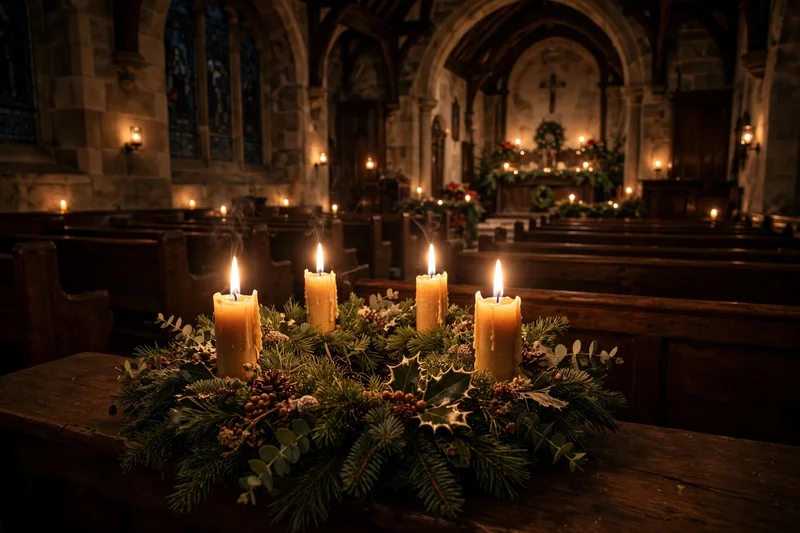
Because the liturgical day started at sunset, the Christmas feast opened with an evening service on December 24. That service is called the Vigil of the Nativity. The word vigil comes from the Latin vigilia, which means a watch kept through the night. Shepherds kept watch over their flocks at night, and the Gospel of Luke places the angel’s message to them in that night watch.
Christmas Eve is also the last day of Advent, the season of waiting and getting ready that runs through December. Advent 2026 begins on Sunday, November 29. When the sun sets on December 24, Advent ends and the Christmas season, called Christmastide, begins. So the evening of December 24 belongs to both seasons at once. It closes the wait, and it opens the feast.
This is why so much of Christmas happens on the night before. The first Mass of Christmas, Midnight Mass, is held late on Christmas Eve, because tradition holds that Jesus was born at night. Many churches also light the Christ Candle in the center of the Advent wreath at this service. In candlelight services, each person in the church receives a candle, and the flame is passed from one person to the next while the group sings “Silent Night.”
When Is Christmas Eve in 2026?
Christmas Eve 2026 is on Thursday, December 24, 2026. Christmas Day is on Friday, December 25, 2026. The date of Christmas Eve never moves. It is always December 24, and only the day of the week changes from year to year.
Here are the key dates around it in 2026:
- The first Sunday of Advent falls on November 29, 2026.
- Christmas Eve falls on Thursday, December 24, 2026.
- Christmas Day falls on Friday, December 25, 2026.
- Boxing Day falls on Saturday, December 26, 2026.
- New Year’s Eve falls on Thursday, December 31, 2026.
- New Year’s Day falls on Friday, January 1, 2027.
Because Christmas Day falls on a Friday in 2026, many people get a long weekend, with the Friday off and the weekend that follows. That makes Christmas Eve 2026 a busy travel day, as families gather on Thursday evening or travel on Thursday to be together for Friday.
Christmas Eve vs Christmas Day: What Is the Difference?
Christmas Eve and Christmas Day are two parts of one feast, but they feel different. Christmas Eve is the night of waiting. Christmas Day is the day of the feast itself.
On Christmas Eve, the mood is quiet and full of expectation. People finish their shopping, wrap the last gifts, cook, and go to church in the evening. Children hang stockings and leave out milk and cookies. Families gather, but the main meal and the main gift opening often wait for the next day.
On Christmas Day, the mood is open and joyful. The gifts are opened in the morning. The big meal is served in the afternoon. Friends call, and the day is spent together at home.
The line between the two days is soft, and it moves by place. In the United States and Britain, most gifts are opened on Christmas morning. In much of central and eastern Europe, gifts are opened on Christmas Eve itself. In Austria, the Czech Republic, Denmark, Finland, Germany, Hungary, Norway, Poland, Slovakia, Sweden, and Switzerland, the evening of December 24 is the main time for gifts. So in those countries, Christmas Eve is the bigger night of the two.
In church terms, the two days are also distinct. Christmas Eve is the Vigil of the Nativity, a service of waiting. Christmas Day has its own Masses, including a morning Mass. The vigil is the last service of Advent. The Masses of Christmas Day are the first of Christmastide.
How Is Christmas Eve Celebrated Around the World?
Christmas Eve looks different in each country, but the same ideas repeat: light, food, family, and waiting.
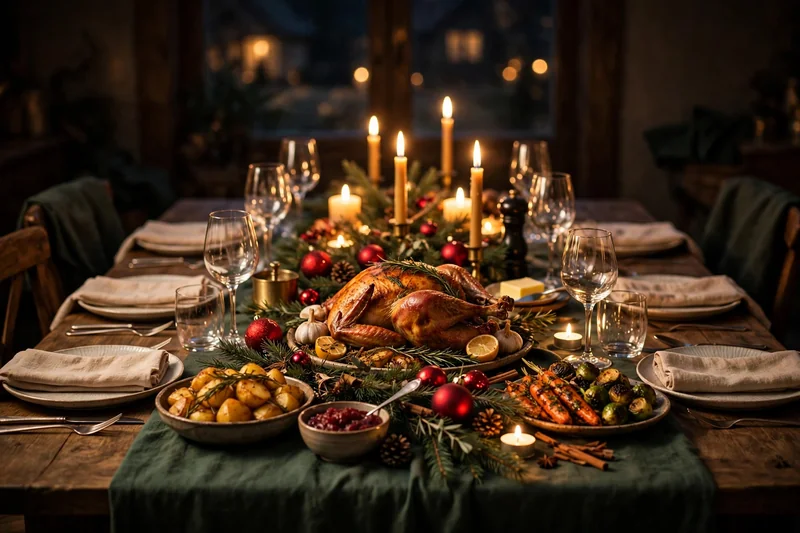
In the United States and Canada, families gather for a meal, go to a candlelight service or Midnight Mass, and hang stockings for Santa Claus. Children track Santa’s trip around the world, and many leave milk and cookies by the tree. Shops close early, and streets go quiet by evening.
In Mexico and much of Latin America, the night is called Nochebuena, which means the Good Night. Families share a late dinner, often with tamales, roast pork, or bacalao, and many go to Midnight Mass, called Misa de Gallo, the Rooster’s Mass. Fireworks and music often run late into the night.
In Poland, the evening meal is called Wigilia, from the Latin word for vigil. The meal is meatless by tradition, with twelve dishes, one for each apostle, and an extra place is set at the table for an unexpected guest. Families share a thin wafer called oplatek, and they wish each other well before they eat. In Poland, Midnight Mass is called Pasterka, the Shepherds’ Mass.
In Germany, the night is called Heiligabend, the Holy Evening. The Christmas tree is often put up and dressed in the afternoon of December 24, and gifts are opened that evening. Families sing carols and eat a festive meal of goose, carp, or sausages with potato salad.
In the Philippines, the nine days before Christmas are marked by dawn Masses called Simbang Gabi, which end on Christmas Eve. Families then gather for Noche Buena, a feast at midnight, with ham, queso de bola, and bibingka, a rice cake cooked in a clay pot.
In the Orthodox churches that follow the Byzantine Rite, Christmas Eve is called Paramony, which means preparation. It is the last day of the Nativity Fast, and many keep a strict fast, eating nothing until the first star appears in the evening sky, in memory of the Star of Bethlehem. After the evening service, families return home to a fasting meal, then go back to church for the all-night vigil.
In Britain, the evening is quieter than the day that follows. Many people go to a carol service or Midnight Mass, and the BBC broadcasts Nine Lessons and Carols from King’s College, Cambridge, a service heard around the world.
Is Christmas Eve a Holiday?
Christmas Eve is widely observed, but it is not a public holiday in the same way Christmas Day is. The answer depends on the country.
In the United States, Christmas Eve is not one of the eleven federal holidays. The federal holiday law, 5 U.S.C. section 6103, lists eleven holidays, and it ends with Christmas Day. Federal offices are open on December 24 unless the president signs an executive order to close them, which has happened in several recent years, including 2019, 2020, and 2024. Some states, such as Kentucky, North Carolina, and South Carolina, give state workers the day off. Many private employers close early or give the whole day off, but they are not required to by law.
In other countries, the answer is different. In Czech law, December 24 is a day of rest. In many European countries, Christmas Eve is a full or partial holiday, and shops close in the early afternoon. In the Philippines and much of Latin America, it is a working day for some, but the evening is treated as a family holiday, and businesses close early.
So the safe way to say it is this: Christmas Eve is a holiday of the heart more than a holiday of the law. Banks, post offices, and government offices may stay open, often with short hours, while families treat the evening as sacred time.
What Do People Do on Christmas Eve?
People spend Christmas Eve in a mix of old habits and small personal rituals. Here are the things that come up most often.
- They go to church. A candlelight service, a carol service, or Midnight Mass is the heart of the evening for many Christians. The service is often the quietest and most moving of the year.
- They share a meal. The Christmas Eve meal is often the most special of the year. It may be a meatless supper of fish and soup in Poland, a roast in Germany, tamales in Mexico, or a big family table in the United States.
- They give gifts. In many homes, one gift is opened on Christmas Eve, and the rest wait for Christmas morning. In much of Europe, all the gifts are opened on Christmas Eve itself.
- They hang stockings and set out treats for Santa Claus. Children hang a stocking by the fireplace and leave milk and cookies. Parents often eat the cookies after the children are asleep.
- They sing carols and read the Christmas story. Families gather around the tree to sing, or they read the birth story from the Gospel of Luke. In many homes, “Twas the Night Before Christmas” is read aloud before bed.
- They track Santa. Children follow Santa’s trip on a map or an app, and parents tuck them in early so Santa can come.
- They light candles. The Christ Candle on the Advent wreath is lit, and homes glow with tree lights, window candles, and lanterns. The light is the point. It marks the end of the darkest weeks of winter and the start of the feast.
Christmas Eve in Other Languages
The names for Christmas Eve in other languages show what each culture loves most about the night.
In German, it is Heiligabend, the Holy Evening. In Spanish, it is Nochebuena, the Good Night. In Polish, it is Wigilia, the vigil, from the Latin vigilia, a night watch. In Italian, it is la vigilia, the same word for a night watch. In Danish, it is Juleaften, the Yule evening. In the Byzantine tradition, it is Paramony, which means preparation.
Each name points to a different part of the night. Holy Evening points to its sacred feel. Good Night points to the family feast. Vigil and watch point to the waiting. Preparation points to the work of getting ready. Together, they give a full picture of what the evening means: a holy, happy, watchful night of getting ready for Christmas.
Frequently Asked Questions
What does Christmas Eve mean?
Christmas Eve means the evening, and the whole day, before Christmas Day. It falls on December 24 every year, and it marks the vigil before the birth of Jesus is celebrated.
When is Christmas Eve in 2026?
Christmas Eve 2026 is on Thursday, December 24, 2026. Christmas Day follows on Friday, December 25, 2026.
Why is it called Christmas Eve?
It is called Christmas Eve because eve is an old word for evening. Christmas comes from the Old English Cristes Maesse, the Mass of Christ, and eve comes from the Old English aefen, evening. So the phrase means Christmas evening. It has nothing to do with Eve, the first woman in Genesis.
Is Christmas Eve a public holiday?
In the United States, Christmas Eve is not a federal holiday. Christmas Day is the federal holiday. Federal offices close on December 24 only when the president orders it, and some states give state workers the day off. In some other countries, such as the Czech Republic, December 24 is a legal day of rest.
What is the difference between Christmas Eve and Christmas Day?
Christmas Eve is the night of waiting and getting ready. Christmas Day is the feast itself. On the Eve, people go to church in the evening, share a meal, and wait. On Christmas Day, gifts are opened and the big meal is served. In much of Europe, though, gifts are opened on Christmas Eve itself.
What is Midnight Mass?
Midnight Mass is the first Mass of Christmas, held late on Christmas Eve, often at midnight. It marks the birth of Jesus, which tradition holds took place at night. Many churches now hold it earlier in the evening, so families with small children can attend.
What does Nochebuena mean?
Nochebuena is the Spanish name for Christmas Eve. It means the Good Night. In Spain and Latin America, it is the night of the big family dinner, often followed by Midnight Mass.

I am Olivia, the passionate writer and creator behind MeaningZime, where I share meaningful insights, inspiring ideas, and engaging content about names, quotes, emotions, and life-related topics. I love exploring the deeper meanings hidden in words and turning them into easy-to-understand articles that inform and inspire readers around the world. Through MeaningZime.com, my goal is to create a place where curiosity meets knowledge and every visitor finds something valuable, relatable, and uplifting.

2 thoughts on “Christmas Eve Meaning: What It Means, Where the Name Comes From, and the 2026 Date”