
December is the twelfth and last month of the year in the Gregorian calendar, and it has 31 days. Its name comes from the Latin word decem, which means ten. It was once the tenth month of the Roman year. Today the month is best known for Christmas, the winter solstice, and the close of the year. It carries a mix of cold weather, bright lights, and quiet hope.
People use the word in dates, plans, and greetings all through the final weeks of the year. It marks the end of one chapter and the start of the next. It shows up in holiday cards, year-end lists, and New Year wishes. This guide explains what December means, where its name comes from, the key dates in 2026, and what the month stands for.
What Does December Mean?
December means the twelfth month of the year, the final month before January opens a new year. It follows November and comes before January. It is one of seven months with 31 days. The short form of the word is Dec., and you will see it on calendars, tickets, and forms. Dec. 25, for example, is how Christmas Day often appears.
In plain use, December is simply a name for a stretch of time. Yet it carries more feeling than most month names. Say the word and most people picture snow, warm lights, gift wrapping, and a calendar page that is nearly full. That feeling comes from the holidays that fill the month. It also comes from its place at the end of the year, when people look back and take stock.
December is also the first month of winter in the Northern Hemisphere. In the Southern Hemisphere it is the first month of summer. In the north, the days grow short until the winter solstice. In the south, they grow long until the summer solstice. The same month can mean cold nights in one place and beach weather in another.
Why Is December Called December?
December is called December because its name comes from the Latin word decem, which means ten. That sounds wrong at first, since it is the twelfth month. But the name is a leftover from an older calendar. In the early Roman calendar, the year began in March. December was the tenth month, so the name fit perfectly.
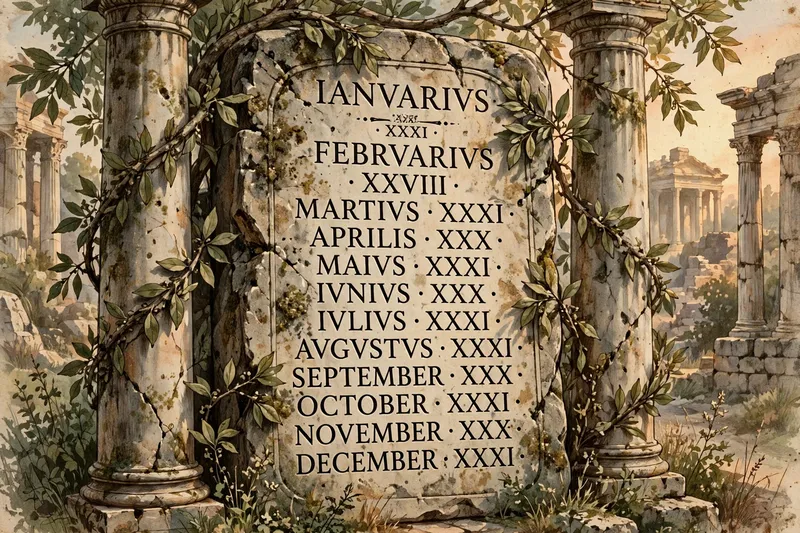
The first Roman calendar is linked to Romulus, the legendary founder of Rome, around 750 BCE. It had only ten months and 304 days. The winter days after December had no month at all. People treated that cold stretch as a nameless gap in the year. With no business or war to mark, the calendar simply stopped and started again in March.
King Numa Pompilius changed that around 713 BCE. He added January and February to fill the winter gap. That pushed December from tenth to twelfth place, yet nobody renamed it. Then Julius Caesar reformed the calendar in 46 BCE. He made January the first month of the year, which locked December in as the twelfth month.
The Gregorian calendar, brought in by Pope Gregory XIII in 1582, kept the name as it was. So December still carries a number that no longer matches its place. September, October, and November do the same, since they mean seven, eight, and nine in Latin. The old counting survives in the names even though the calendar moved on.
Before the Latin name reached England, the Anglo-Saxons had an older name for the month. They called December and January Geolmonath, which means yule month. That word is tied to the Old Norse word jol, the name of a winter feast. It shows that people in the north already linked this dark month with light and feasting long before the Roman name arrived.
December 2026: Key Dates
December 2026 begins on Tuesday, December 1, and it ends on Thursday, December 31. The first big date is Friday, December 4, when Hanukkah begins at sundown. The festival of lights runs for eight nights. It ends at nightfall on Saturday, December 12.
Sunday, December 6 is St. Nicholas Day, a day of small gifts in many European homes. Monday, December 7 is Pearl Harbor Remembrance Day in the United States. Thursday, December 10 is Human Rights Day. Saturday, December 12 also marks the Feast of Our Lady of Guadalupe.
The winter solstice falls on Monday, December 21, 2026, at 3:50 p.m. Eastern Standard Time. It is the shortest day of the year in the Northern Hemisphere. The Cold Moon rises on Wednesday, December 23. Christmas Eve follows on Thursday, December 24.
Christmas Day falls on Friday, December 25, 2026. It is the only federal holiday in the United States during December. Kwanzaa begins on Saturday, December 26. It runs through Friday, January 1, 2027. The month closes with New Year’s Eve on Thursday, December 31, and the new year opens on Friday, January 1.
December Holidays in 2026
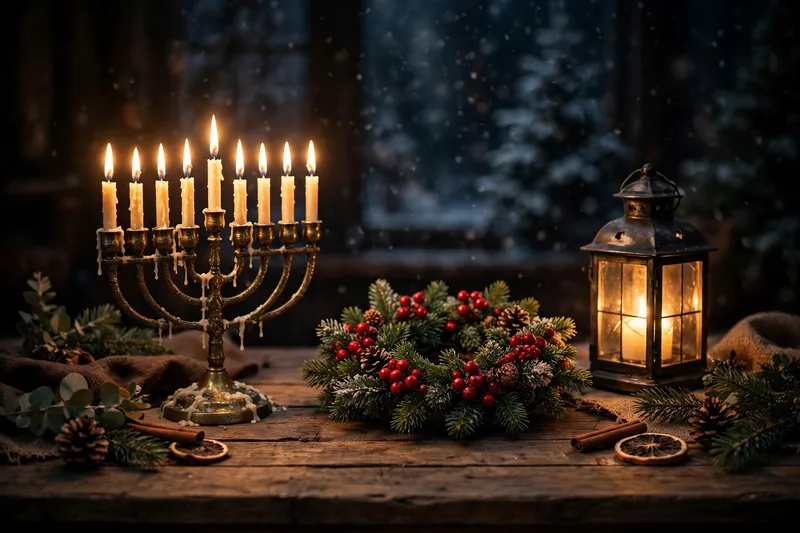
December holds more major holidays than any other month. In 2026 they arrive in a steady line from the first week to the last. Hanukkah opens the season on December 4, when families light the first candle of the menorah. It remembers the rededication of the Second Temple in Jerusalem. The eight nights that follow are a time for fried foods, songs, and gifts.
Christmas is the best known December holiday, and it falls on Friday, December 25, 2026. It marks the birth of Jesus Christ for Christians. It is also marked as a cultural holiday by millions of people who are not Christian, with trees, lights, and shared meals. Our Christmas meaning guide explains the day in full, from its history to the words people use around it.
The winter solstice on December 21 is the quiet turning point of the month. It is the longest night of the year, after which the days slowly grow longer again. Many cultures have marked this night with fires and feasts for thousands of years. Some pagan traditions still call it Yule. Our winter meaning guide covers the season in depth.
Kwanzaa runs from December 26 to January 1. It was created in 1966 by Dr. Maulana Karenga as a celebration of African American culture and heritage. Each of its seven days honors one principle, such as unity, purpose, and faith. Families gather for candle lighting, music, and shared food.
Advent, the season of waiting before Christmas, runs through the first weeks of the month in many churches. In Catholic tradition, December is called the Month of the Advent of Christ. Our Advent meaning guide explains how the season works and why it matters to the people who keep it.
What Does December Symbolize?
December symbolizes endings and reflection, since it closes the year. It asks people to look back at what the last twelve months held. It is a natural time to take stock, to thank the people who helped, and to let go of what did not work. That is why so many people write year-end lists and set goals in December.
The month also stands for light in the dark, because its holidays all use light as a sign of hope. Candles glow in windows, trees shine in town squares, and the menorah adds one flame each night. The light is a promise that the dark days will pass. That promise feels strongest on the longest night of the year.
December stands for giving and gratitude as well, and the two go together in this month more than in any other. People buy gifts, donate food and coats, and send cards to friends they have not seen in months. Our gratitude meaning guide looks at why thanks matters so much at this time of year.
Finally, December stands for rest before renewal. The cold and the short days slow life down and invite quiet evenings at home. That rest is not an end in itself. It prepares the ground for January, when the fresh start effect makes new goals feel possible. Our New Year meaning guide explains how that fresh start works.
December Symbols: Birth Flower, Birthstone, and Zodiac
December has its own set of symbols, and people born in the month often know them by heart. The birth flower is the narcissus, a pale winter flower that stands for hope and new beginnings. It blooms when little else does, which fits a month that ends in darkness and opens into light.
The birthstones are turquoise, zircon, and tanzanite. Turquoise is the best known of the three, and its blue-green color has been linked with calm and protection for centuries. Zircon comes in many colors, and tanzanite is a deep blue stone found only in Tanzania.
The zodiac signs for December are Sagittarius until December 21 and Capricorn from December 22 onward. Sagittarius is linked with travel, honesty, and a love of open space. Capricorn is linked with patience, hard work, and steady goals. People who follow astrology often read these signs as a sketch of December-born character.
How to Use December in a Sentence
December is easy to use in a sentence, since it works like any other month name. You can say, “We met last December.” You can say, “Her birthday is in December.” You can say, “The shop closes early in December.” In each case, the word names the month and sets the time of the event.
Writers often pair December with a feeling or an image. “A cold December morning” and “the last days of December” are common phrases. The word can also stand alone as a short answer. Ask “When are you moving?” and the answer can be one word: “December.” It is also used, though rarely, as a female given name, passed down from the month itself.
A small grammar note helps with dates. In American English, write “December 25, 2026” with a comma after the day. In British English, write “25 December 2026” with no comma. The short form Dec. takes a full stop in American English, as in Dec. 25, and it is handy when space is tight.
December in the Southern Hemisphere
In the Southern Hemisphere, December means summer, not winter, and the season flips. The summer solstice falls on December 21 or 22. It is the longest day of the year in places like Australia, New Zealand, and South Africa. Christmas there is a summer holiday, and many families eat lunch outside or spend the day at the beach.
This flip is a good reminder that a month name means a place on the calendar, not a single kind of weather. December is the twelfth month everywhere, but what it feels like depends on where you stand. In the north it closes the year with snow and early dark. In the south it opens the summer with long bright evenings.
Frequently Asked Questions About December
What does December mean in simple words? December means the twelfth and last month of the year, with 31 days. Its name comes from the Latin word decem, which means ten.
Why is December called December if it is the twelfth month? December was the tenth month in the early Roman calendar, which began in March. When January and February were added to the front of the year, it moved to twelfth place, but it kept its old name.
When does December start in 2026? December 2026 starts on Tuesday, December 1, 2026. It ends on Thursday, December 31, 2026. Christmas Day falls on Friday, December 25, and the winter solstice falls on Monday, December 21.
What holidays are in December 2026? The main holidays are Hanukkah from December 4 to 12, the winter solstice on December 21, Christmas Eve on December 24, Christmas Day on December 25, Kwanzaa from December 26 to January 1, and New Year’s Eve on December 31.
What is December’s birth flower and birthstone? December’s birth flower is the narcissus. Its birthstones are turquoise, zircon, and tanzanite. Turquoise is the most widely known of the three.
Is December winter or summer? December is the first month of winter in the Northern Hemisphere. It is the first month of summer in the Southern Hemisphere. The winter solstice falls in December in the north, and the summer solstice falls in December in the south.
December is a month of endings that feel like beginnings. That is why it stays in the mind long after the year turns. It closes the calendar with light, thanks, and rest, and it hands the new year a clean page.

I am Olivia, the passionate writer and creator behind MeaningZime, where I share meaningful insights, inspiring ideas, and engaging content about names, quotes, emotions, and life-related topics. I love exploring the deeper meanings hidden in words and turning them into easy-to-understand articles that inform and inspire readers around the world. Through MeaningZime.com, my goal is to create a place where curiosity meets knowledge and every visitor finds something valuable, relatable, and uplifting.

6 thoughts on “December Meaning: What December Means, Its Origin, and the 2026 Holidays”