
It’s 7 a.m. You’ve got coffee in one hand and your phone in the other. The NYT Connections grid is staring back at you with 16 words, and none of them seem to belong together. You tap four that feel right. Wrong. Then you try again. Wrong again. Now your streak is in danger before the day has even started.
Sound familiar? You’re in good company. Millions of Americans play Connections every day, and plenty of them look up a Mashable Connections hint today when a group refuses to click.
The trick is finding help that doesn’t ruin the puzzle. Seeing the full answer feels like cheating, and it takes away the small thrill of figuring it out yourself. A spoiler-free clue is different. It nudges you in the right direction and leaves the final “aha” moment to you.
That’s exactly what this guide is built for. You’ll learn how Connections works, what the four difficulty colors really mean, and why certain words trick even experienced players. You’ll also get practical strategies for spotting trap words, using elimination, and thinking in patterns instead of single meanings.
You will also get a worked example, a practice routine, and answers to common questions.
What Is NYT Connections?
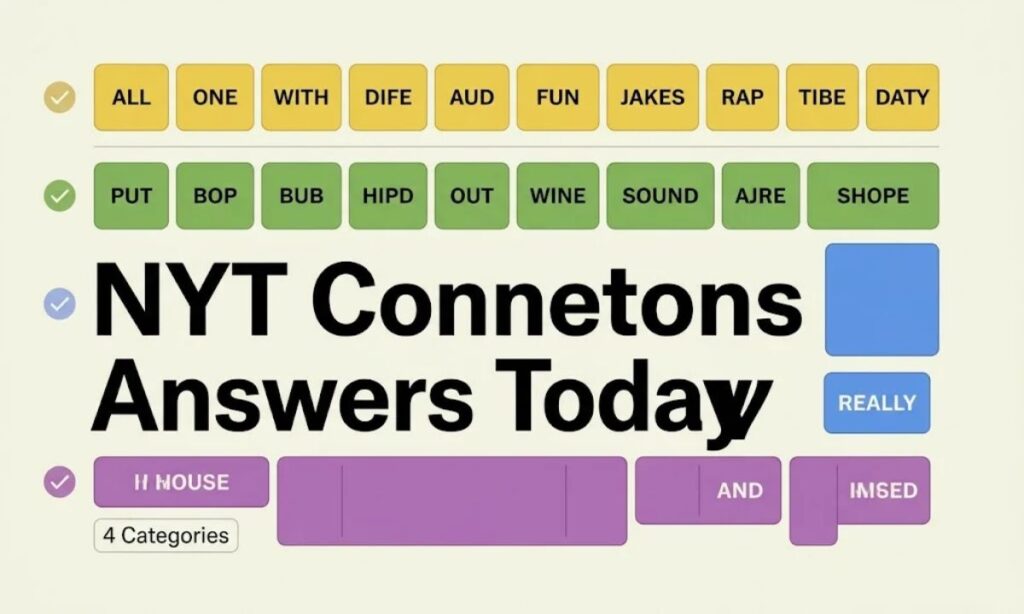
NYT Connections is a daily word puzzle from The New York Times. You see a grid of 16 words. Your job is to sort them into four groups of four. Each group shares one theme.
You can play on the web or in the NYT Games app. Mistakes are limited, so every guess matters. The puzzle resets at midnight, and a new grid goes live.
Here is the game at a glance:
- Words on the grid: 16
- Groups to find: 4
- Words per group: 4
- Mistakes allowed: 4
- New puzzle: once a day
Why Mashable Connections Hint Today Is So Popular
Connections is a habit game. It takes five to ten minutes, and it gives you something to talk about at work or in a group chat. That is why hint pages get so much traffic.
Mashable’s daily guide is popular for three reasons:
- It respects your choice. You can read a nudge without seeing the answer.
- It follows a steady format. You know where the hints end and the solutions begin.
- It is quick. Most players only want one push, not a full walkthrough.
Streaks add pressure. A 100-day streak feels like something worth protecting. A good hint saves the streak and keeps the puzzle enjoyable.
Mashable Connections Hints Today: Get Clues Without Spoilers
Spoiler-free hints are the sweet spot. They point you toward a category without naming it.
Mashable-style guides usually follow this pattern:
- They list the puzzle number and the date.
- They give a small hint for each color group.
- They show a clear spoiler warning.
- They reveal the full answers below the warning.
Read the hints one at a time. After each one, go back to the grid and try again. If a hint says a group is about “things in a kitchen,” scan the grid for kitchen words before reading further.
A good rule: use one hint, then play. Come back for another only if you are still stuck.
NYT Connections Answers Today: Check All Four Categories
Sometimes you just need the answer. That is fine, especially when a streak is on the line.
Every day brings a new grid, so the answers change daily. Always check that the date and puzzle number on a guide match yours. A guide for yesterday’s puzzle will not help.
When you check answers, do this:
- Scroll past the spoiler warning only when you are ready.
- Look at the category names, not just the words.
- Ask yourself what you missed, so you spot it faster next time.
The category name is the real lesson. If you only copy the words, you learn nothing. If you read why they belong together, you train your brain for the next puzzle.
How to Find Connections Between Words When You’re Stuck
When the grid feels impossible, change how you look at it. Try these steps:
- Read every word aloud. Sound can reveal rhymes or homophones.
- Look for a second meaning. “Bark” can be a dog sound or tree covering.
- Check word shapes. Some groups hide letters, such as animals inside longer words.
- Try adding a word. Many groups follow a pattern like “___ board” or “fire ___.”
- Step away. A two-minute break often shows you what staring could not.
Stuck players often fixate on one meaning of a word. Flexible thinking is the main skill here.
How NYT Connections Puzzle Works
You tap four words and press Submit. If they match a category, the group locks in and shows a color. If not, you lose one mistake. The game will sometimes tell you that you are “one away.” That message is a strong clue that three of your four words are right.
Once you make four mistakes, the game ends and reveals the solution. Your finished grid can be shared as a pattern of colored squares. That is why so many people post it online.
Difficulty Colors
Each group has a color. The color tells you how hard the setters expect it to be.
| Color | Difficulty | Typical Theme |
| Yellow | Easiest | Straightforward category, like fruits or tools |
| Green | Easy to medium | Slightly broader or less obvious link |
| Blue | Medium to hard | Trivia, phrases, or less common meanings |
| Purple | Hardest | Wordplay, hidden words, or “words that follow X” |
The colors are only revealed after you solve a group. Still, the ranking helps you plan. Start where you feel most sure, and save the toughest group for last.
Why You Get Stuck in Connections
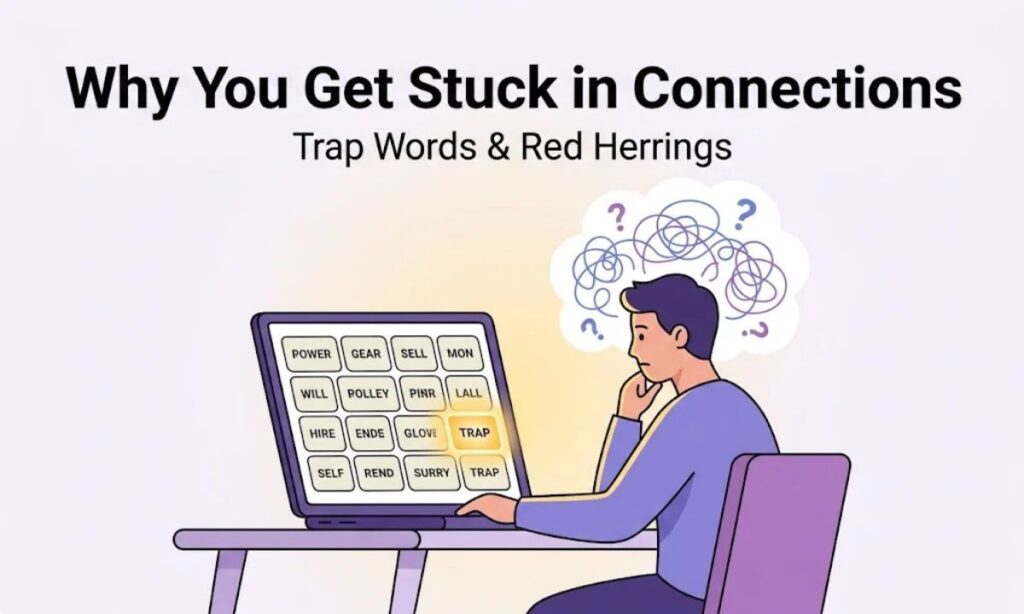
Most players do not lack vocabulary. They fall into a few common traps.
- Red herrings. The grid often contains five or six words that seem to fit one category.
- Overlap. One word can belong to two groups.
- Single-meaning thinking. You lock onto the common definition of a word.
- Guessing too fast. Rushing burns mistakes.
- Tired brain. Late at night, your pattern spotting slows down.
Knowing these traps helps you pause before you tap. The puzzle is designed to mislead you a little. That is part of the fun.
What Makes Mashable Connections Guide Useful
A good hint guide does more than list answers. It teaches you how to think.
Here is what to look for in any daily guide:
- Clear date and puzzle number, so you know it matches your grid.
- Layered hints, from vague to specific.
- Spoiler warnings, so you stay in control.
- Category explanations, not just word lists.
- Fast loading and clean layout, since most readers are on a phone.
Use hints as a coach, not a crutch. Over time, you should need them less.
Smart Strategy to Solve NYT Connections Faster
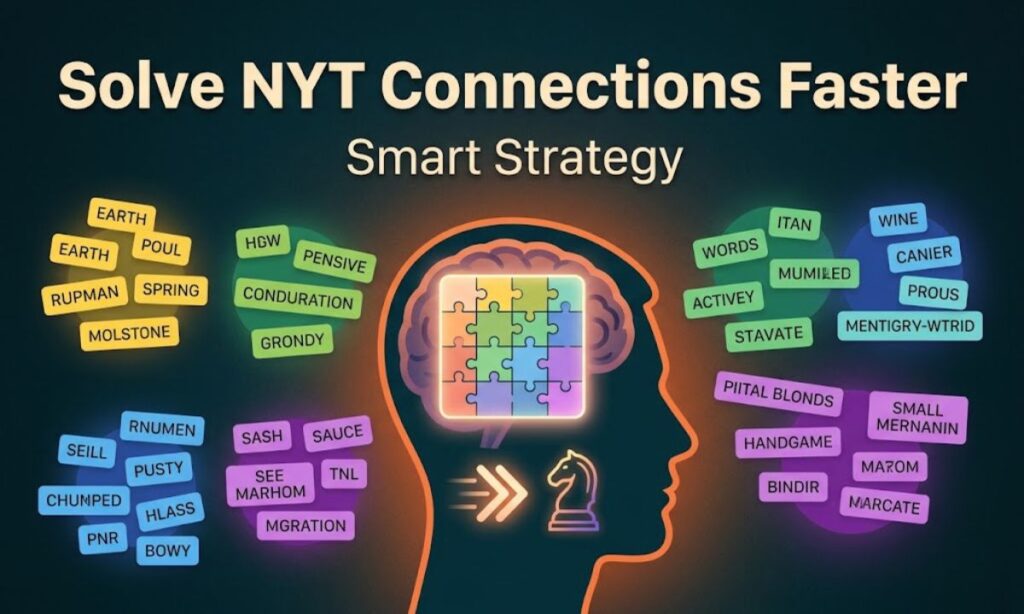
You do not need luck. You need a routine.
Start With Obvious Groups
Scan the grid for an easy category. Common ones include colors, body parts, car brands, or types of food. If you can lock in a yellow group, the grid shrinks from 16 words to 12.
Fewer words means fewer traps. Easy wins build momentum.
Focus on Category Thinking
Do not ask, “What does this word mean?” Ask, “What group could this word belong to?”
For example, “Mercury” could be a planet, a metal, a god, or a car brand. Listing the possible categories first makes the real one easier to spot.
Use Elimination Method
If you know three groups, the fourth is automatic. Even when you only know two, the leftover words often point to a theme.
Try this order:
- Lock in the group you are most sure of.
- Cross out words that clearly belong there.
- Look at what remains.
- Repeat.
Watch for Trap Words
If five words fit one category, one of them is a decoy. Find the word with a second possible home. That word likely belongs to a different group.
This is the most useful habit you can build. Always ask which of the five words has another job.
Think in Patterns, Not Words
Advanced groups often follow a pattern, not a meaning. Examples include:
- Words that can follow “sun” or “fire”
- Words with a hidden smaller word
- Words that become new words when one letter changes
- Words that sound like letters or numbers
If a group of meaning-based guesses keeps failing, switch to pattern thinking.
Example Breakdown: How Solving Works
Here is a made-up grid to show the process. It is an original practice example, not a real daily puzzle.
The 16 words: BANK, BED, MOUTH, DELTA, CHECK, TELLER, VAULT, LOAN, NET, SPELL, VOTE, SHADOW, BEARD, SCATTER, PLANT, SPIGOT.
Step 1: The “Obvious” Trap
Five words scream “banking”: BANK, CHECK, TELLER, VAULT, and LOAN. Most players tap all five and wonder why it will not work.
Do not guess yet. Ask which of the five could belong elsewhere. BANK can also mean the edge of a river.
Step 2: Spotting the Theme Group
BED, MOUTH, DELTA, and BANK are all parts of a river. Now the trap is solved. You submit them, and the group locks in.
That leaves CHECK, TELLER, VAULT, and LOAN as the banking group. Two groups are done, and only eight words remain.
Step 3: The Wordplay Group
Look at NET, SPELL, VOTE, and SHADOW. What links them? You can cast each one: cast a net, a spell, a vote, a shadow.
This kind of group relies on verb pairings. It takes a moment, but once you see “cast,” it clicks.
Step 4: The Purple Finish
The last four are BEARD, SCATTER, PLANT, and SPIGOT. None of them look related until you check inside each word. BEARD hides “bear.” SCATTER hides “cat.” PLANT hides “ant.” SPIGOT hides “pig.”
That is a classic purple group: hidden animals. When the remaining words look random, try looking inside them.
Case Study: How One Streak Survived a Brutal Purple Category
This is an illustrative scenario, not a real person’s story.
Picture a player on a 60-day streak. She solves yellow and green in under a minute. Then she hits a wall with eight words left and three mistakes already used.
She stops tapping. She reads the remaining words aloud. Two of them sound like letters when spoken. She tests that idea on a third word, and it fits.
She had been stuck on meanings. Switching to sound solved it. Her fourth mistake stayed unused, and the streak lived.
The lesson is simple. When meaning fails, try sound, spelling, or hidden words. Slowing down saves more streaks than speed does.
Connections Compared to Other NYT Word Games
Connections sits among several popular daily puzzles. Each one tests a different skill.
| Game | Main Skill | Typical Play Time | Attempts |
| Connections | Grouping and categories | 5–10 minutes | 4 mistakes |
| Wordle | Letter deduction | 3–5 minutes | 6 guesses |
| Spelling Bee | Vocabulary and anagrams | 10+ minutes | Unlimited |
| Strands | Theme and word search | 5–10 minutes | Unlimited, with hints |
| The Mini | Quick crossword clues | 1–3 minutes | Unlimited |
Wordle rewards logic about letters. Connections rewards flexible thinking about meaning. Players who enjoy trivia and wordplay often prefer Connections for that reason.
Why Daily Practice Matters
Connections gets easier with repetition. You start to recognize how the setters think. Certain tricks come back often, like hidden words, homophones, and “___ + word” patterns.
Here is a simple routine:
- Play at the same time each day.
- Review the category names after you finish.
- Keep a short note of new tricks you learned.
- Replay older puzzles from the archive if you want extra practice.
Ten minutes a day beats an hour once a week. Your brain builds pattern memory through steady exposure.
Common Mistakes to Avoid
Small habits cost players the most mistakes. Watch out for these:
- Submitting the first four that fit. Always check for a fifth.
- Ignoring the “one away” message. It means swap one word, not start over.
- Forgetting shuffle. The shuffle button breaks visual bias.
- Reading hints too early. Give yourself two minutes first.
- Playing tired. Fresh eyes spot more.
- Copying answers without learning. You will face the same trick again.
Fixing even two of these can lift your solve rate quickly.
Advanced Thinking Technique
Experienced players use a method called category stacking. They list two or three possible themes for a word before choosing. Then they look for overlap across words.
For example, take the words “pitcher,” “glass,” “carafe,” and “jug.” They look like containers. But if “pitcher” also appears next to “catcher” and “umpire,” the grid may be hiding a baseball group.
Another advanced move is working backward from purple. If you suspect a wordplay group, test unusual features first. Look at word length, repeated letters, and hidden words. Solving purple early can unlock everything else.
Finally, trust the structure. Each word belongs to exactly one group. If your theory leaves a word with no home, the theory is wrong.
Why Every Puzzle Feels Different
Some days you finish in two minutes. Other days a single group wrecks you. That is normal.
Difficulty depends on the theme, the traps, and your own knowledge. A sports fan will breeze through a puzzle full of team names. A cook may find a food-based grid easy. Your background shapes your experience.
Mood and focus matter too. Treat tough days as practice, not failure. The next grid is always a fresh start.
Conclusion
A Mashable Connections hint today can save your streak, but the real goal is getting better at the game. Use hints in layers, check answers only when needed, and learn from each category you miss.
Start with the easy group, watch for trap words, and switch to pattern thinking when meaning fails. Play daily, stay curious, and enjoy the puzzle. Your solving instincts will sharpen faster than you expect.
Frequently Asked Questions
Is Mashable Connections Hint Today free to read?
Yes, daily hint guides are generally free to read online. Layouts and ads vary by site.
What time does a new Connections puzzle appear?
A new puzzle goes live at midnight, based on your local time zone.
How many mistakes can you make in NYT Connections?
You can make four mistakes. On the fourth, the game ends and shows the solution.
What does the purple category usually involve?
Purple is the hardest group. It often relies on wordplay, hidden words, or a shared pattern.
Can I get hints without seeing the answers?
Yes. Hint guides give small clues for each category before any spoiler warning appears.
Does the order I solve groups matter?
No, you can solve in any order. Most players start with the easiest group to reduce traps.
How can I improve at Connections quickly?
Play daily and review category names after each puzzle. Learning common tricks builds speed.

I am Olivia, the passionate writer and creator behind MeaningZime, where I share meaningful insights, inspiring ideas, and engaging content about names, quotes, emotions, and life-related topics. I love exploring the deeper meanings hidden in words and turning them into easy-to-understand articles that inform and inspire readers around the world. Through MeaningZime.com, my goal is to create a place where curiosity meets knowledge and every visitor finds something valuable, relatable, and uplifting.
