
Diwali meaning: it is the Hindu festival of lights, and its name comes from the Sanskrit word Deepavali, which means a row of lamps. Homes are lit with small clay lamps called diyas, and the light stands for good over evil, knowledge over ignorance, and hope over fear. You can read more background on Diwali on Wikipedia. Diwali falls in late October or early November each year, and in 2026 the main day is Sunday, November 8, just weeks before Black Friday starts the holiday shopping season.
In simple words, Diwali is not just a night of lights. It is a five day festival of cleaning, prayer, family meals, sweets, and gifts. People clean their homes, wear new clothes, share food with loved ones, and light lamps to welcome luck and good health into the year ahead.
What Does Diwali Mean?
Diwali comes from Deepavali, where the Sanskrit word deepa means a lamp or a light and the word avali means a row or a series, so put together, Deepavali means a row of lamps.
That name fits the festival well, because on Diwali night, rows of diyas line doorsteps, windows, walls, and riverbanks, and each lamp is small, but together they turn a dark night bright.
The light has a deeper meaning too. In Hindu thought, light stands for knowledge, while darkness stands for ignorance and fear. So lighting a lamp is a simple act with a big idea behind it: choose light, choose good, and choose hope.
When Is Diwali in 2026?
Diwali follows the Hindu lunar calendar, so its date moves each year, and it falls on Amavasya, the new moon night in the month of Kartik, which in 2026 is Sunday, November 8.
The festival runs for five days in total, and each day has its own name and its own focus. Here are the five days of Diwali in 2026:
- Friday, November 6: Dhanteras, the first day, when many people buy gold, silver, or new utensils.
- Saturday, November 7: Chhoti Diwali, or Naraka Chaturdashi, a smaller day of lamps and early baths.
- Sunday, November 8: Diwali, or Lakshmi Puja, the main day, with evening prayer, diyas, and fireworks.
- Monday, November 9: Govardhan Puja, a day linked to Lord Krishna and to gratitude for nature.
- Tuesday, November 10: Bhai Dooj, the last day, when brothers and sisters mark their bond with gifts and food.
Note that dates can shift by a day in some regions, and in parts of South India, for example, Naraka Chaturdashi on November 7 is the main day of celebration. Check a local calendar if you plan to join a community event.
Why Is Diwali Called the Festival of Lights?
Diwali is called the festival of lights because lamps are at its heart. The main night is Amavasya, the darkest night of the lunar month, when the moon gives no light, and people answer that darkness with light of their own.
Homes, temples, shops, and streets glow with diyas, candles, lanterns, and strings of lights, and rangoli patterns in coloured powder brighten doorways, and fireworks light the sky.
The lamps are also a welcome sign, because many families light diyas to invite Lakshmi, the goddess of wealth and good fortune, into their homes, and a bright home, in this view, is an open and hopeful home.
The Stories Behind Diwali
Diwali has no single origin story, and different regions and faiths tell different tales, but they share one theme: good wins over evil.
In North India, the best known story is the return of Rama. After 14 years in exile and his win over the demon king Ravana, Rama came home to Ayodhya with his wife Sita and his brother Lakshmana. The people lit rows of lamps to guide them home through the dark night.
Many families also link Diwali to Lakshmi. On the main night, they pray to Lakshmi and Ganesha for wealth, health, and a good start to the year. Shops and workplaces are cleaned and blessed too.
In other traditions, Diwali marks Krishna’s win over the demon Narakasura. For Jains, it marks the nirvana of Mahavira. For Sikhs, Bandi Chhor Divas falls at the same time and marks the release of Guru Hargobind from prison, while the stories differ, but the light means the same thing in each: hope after hardship.
How Diwali Is Celebrated
Diwali starts well before the main night. Families clean and paint their homes. They shop for new clothes, gifts, and sweets. They make or buy rangoli powder, diyas, and lights.
On the main day, the evening is the high point. Families dress in fine clothes, light diyas, and offer prayers. Then they share a feast, give sweets and gifts, and meet friends and kin.
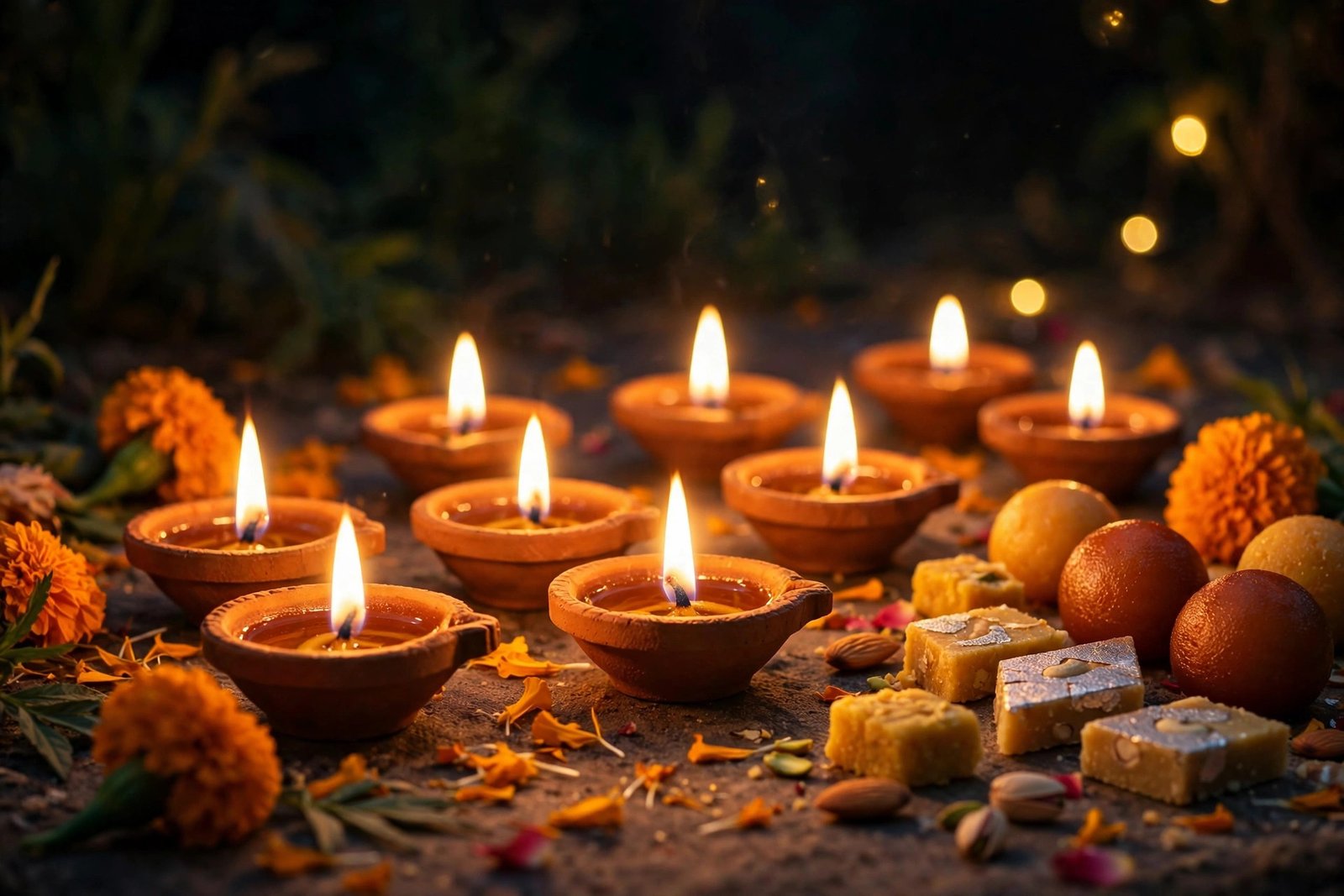
Fireworks are a big part of the night for many people, but they are not the whole story. For many families, the key moments are quiet ones: a lamp lit at the door, a prayer said with family, and a sweet shared with a neighbour.
Diwali in 2026, in Short
So what is Diwali, in short? It is the Hindu festival of lights, named for a row of lamps. It marks good over evil, light over dark, and hope over fear. It runs for five days, with the main day on Sunday, November 8, 2026. At its heart is a simple act: light a lamp, share food, and welcome good fortune into your home.
Frequently Asked Questions
What does Diwali mean?
Diwali means a row of lamps. It comes from the Sanskrit word Deepavali, from deepa, a lamp, and avali, a row.
When is Diwali in 2026?
The main day of Diwali in 2026 is Sunday, November 8. The five day festival runs from Friday, November 6, to Tuesday, November 10.
Why is Diwali called the festival of lights?
It is called the festival of lights because lamps, or diyas, are at its heart. People light them to mark good over evil and to welcome Lakshmi into their homes.
How long does Diwali last?
Diwali lasts five days. Each day has its own name and focus, from Dhanteras on day one to Bhai Dooj on day five.
Is Diwali a public holiday?
Yes, Diwali is a public holiday in India and in some other countries with large Hindu communities. In other places, it is a cultural and religious festival, not a public holiday.
What do people do on Diwali?
People clean their homes, light diyas, pray, wear new clothes, share sweets and gifts, and meet family and friends. Many also set off fireworks in the evening.

I am Olivia, the passionate writer and creator behind MeaningZime, where I share meaningful insights, inspiring ideas, and engaging content about names, quotes, emotions, and life-related topics. I love exploring the deeper meanings hidden in words and turning them into easy-to-understand articles that inform and inspire readers around the world. Through MeaningZime.com, my goal is to create a place where curiosity meets knowledge and every visitor finds something valuable, relatable, and uplifting.

3 thoughts on “Diwali Meaning: What Diwali Means and When It Falls”